
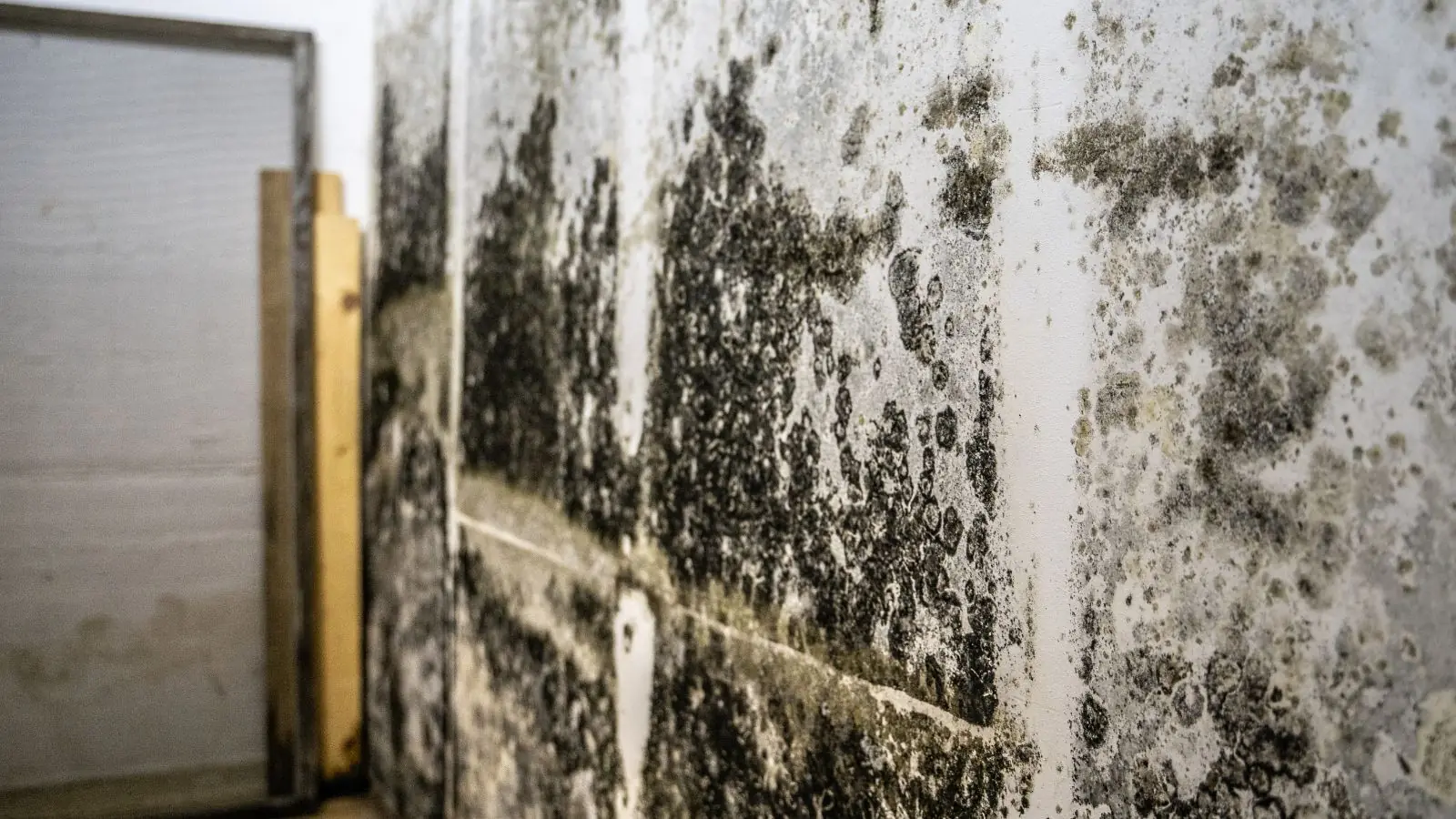
Basement mold removal is a sequence: seal off the damp lower level, filter the air, take out affected materials and dry the space once the leak has been fixed. Mold needs moisture to grow, so no cleaning step lasts unless the water stops first.
Not every Glendora home has a true basement, and we do not assume one. This post covers the spaces that behave like one: below-grade rooms, lower levels of hillside homes, garages and storage rooms.
Which Glendora spaces count as lower level
A true basement sits fully below ground. Many homes here instead have a daylight lower level on a sloped lot, a sunken family room, a partly buried garage, or a storage room cut into a hillside. Each one can have a wall that touches soil on at least one side.
Soil contact is what matters. A wall that holds back dirt can pass moisture inward as vapor or as visible seepage, while a wall above grade usually gets wet only from a plumbing leak or a roof issue.
Before any plan, a technician maps which walls touch soil, where the floor drain is, and where the plumbing runs. That sketch answers most of the source question.
Situation, first move and who to call
| Situation | First move | Who to call |
|---|---|---|
| Damp wall with white mineral crust after rain | Photograph it, watch it through a dry spell and a wet one | A drainage or waterproofing contractor, then a remediation crew once the wall is dry |
| Pooled water on the floor after a pipe or heater leak | Shut off supply, remove standing water | A plumber and a water mitigation crew |
| Musty smell in a closed storage room | Check for leaks, open the room, take moisture readings | A restoration crew for readings and a scope |
| Visible growth on drywall after a past leak | Keep the area closed, stop foot traffic and fans | A mold remediation company that works to S520 |
| Water came in during a storm from the slope | Treat it as a flood and do not use fans | Your insurer, then a flood damage restoration crew |
| Wet boxes and furniture in a lower room | Move what is dry, bag what is soaked | A restoration crew for contents handling guidance |
If you cannot tell which row fits, the safest first move is the same: stop adding moisture and take readings.
Groundwater seepage versus plumbing leaks
Seepage shows up on the lower wall and floor joint, gets worse after rain, and tends to leave mineral stains. A plumbing leak follows pipes, shows up near fixtures or water heaters, and does not care about the weather. A running meter with fixtures off points toward plumbing.
The fix differs. A plumbing leak ends when the pipe is repaired. Seepage can need drainage or grading work, which belongs to a contractor who does that for a living, not to a remediation crew.
Why it matters here: mold remediation is only as good as the source repair. If the wall keeps getting wet, new growth has what it needs.
A simple test helps sort the two. Tape a square of plastic sheeting tightly to the bare wall for a couple of days, then see which side collects droplets. Moisture on the room side points to humid indoor air, while moisture under the plastic points to water coming through the wall.
Questions about your own situation?
Call dispatch to talk through what you are seeing. Scope and price are explained before work starts.
How remediation is staged
Mold remediation has a published industry standard, ANSI/IICRC S520, that homeowners can ask each company about. Any homeowner can put the S520 question to a bidder.
Fix the water source
A plumber or drainage contractor ends the moisture. Remediation before this step is wasted effort.
Set containment
Plastic barriers and a zipper door seal off the work zone. A negative air machine with a HEPA filter keeps the pressure lower inside, so air flows into the zone, not out.
Remove affected materials
Wet drywall, carpet, pad and wet insulation are cut out and bagged inside containment. Solid surfaces are cleaned with HEPA vacuums and damp wiping. Basement mold removal in a hillside lower level often means cutting drywall back to the first dry stud bay.
Dry the structure
Air movers and LGR dehumidifiers bring framing and slab readings back to a dry reference.
Verify
The crew checks moisture readings and does a visual inspection. If you want sampling, ask who would do it and how that work is kept apart from the removal company.
What to do about stored belongings
Lower rooms collect boxes, and cardboard is the first thing to go. Cardboard that stayed wet longer than 48 hours is usually discarded, as are upholstered items and anything porous with visible growth.
Hard goods such as plastic bins, metal tools and glass can often be wiped and kept. Photographs, papers and heirlooms should be set aside and handled gently, since specialists can sometimes work on them.
Move dry items to a clean room before containment goes up, and do not carry moldy items through living areas. Photograph the pile before you discard it, since an adjuster may ask.
- Keep: sealed plastic bins, metal, glass, ceramics.
- Set aside for a closer look: photos, documents, wood furniture.
- Discard: wet cardboard, carpet remnants, soft furnishings with growth.
Glendora note: hillsides, seepage and flood coverage
Glendora's north edge runs along the San Gabriel Mountains foothills, so some lots slope and a lower room can sit partly below the uphill ground. If you see dampness on a wall that faces the slope, assume soil contact until a technician confirms otherwise.
The state insurance department's FloodFacts page (California Department of Insurance) puts flood and mudflow outside standard homeowners coverage. Seepage is usually excluded too, so run your address through FEMA's map tool and ask your insurer what applies. A new federal flood policy usually starts only after a 30 day wait.
Honest limits
We do not do waterproofing, French drains or foundation repair, and remediation does not make a wall waterproof. Our part is containment, removal, drying and readings. Health questions belong to a physician.
Find out if your state licenses mold work. A water event that is recent can start with flood damage restoration, and visible growth is the scope of mold remediation. We handle lower levels in Covina and San Dimas the same way.
Frequently asked questions
No, and we do not assume it. Many homes have a daylight lower level, a garage below the main floor, or a hillside storage room. Treat any room with a wall against soil as a possible moisture risk.
A technician will ask which walls touch soil before suggesting any basement mold removal plan.
Small, surface growth on a hard surface may be something you can wipe, using gloves and eye protection. The EPA says materials wet longer than 48 hours or with visible mold need remediation guidance. When the area is larger than a few feet or inside walls, call a professional.
Yes, in a closed room with clean water behind the problem. Keep the room door closed and avoid fans that blow across moldy surfaces. Do not start fans if the water was a flood or sewage.
Seepage and flood are usually excluded, and flood needs separate coverage. A plumbing leak that was sudden may be covered. Read your policy and put the question to your insurer.
It depends on the area, the materials and the drying days. Containment and removal can take a few days, and drying adds more. Ask for the scope and price in plain terms before work begins.
Look for a concrete or block wall with dirt or a planter on the other side, and check whether the floor is lower than the yard outside. A technician can confirm with a moisture meter. Your original plans from the Building and Safety Division may also help, so ask what records exist.
Talk to dispatch
The line is open 24/7. Describe what you see and the next step is explained.