
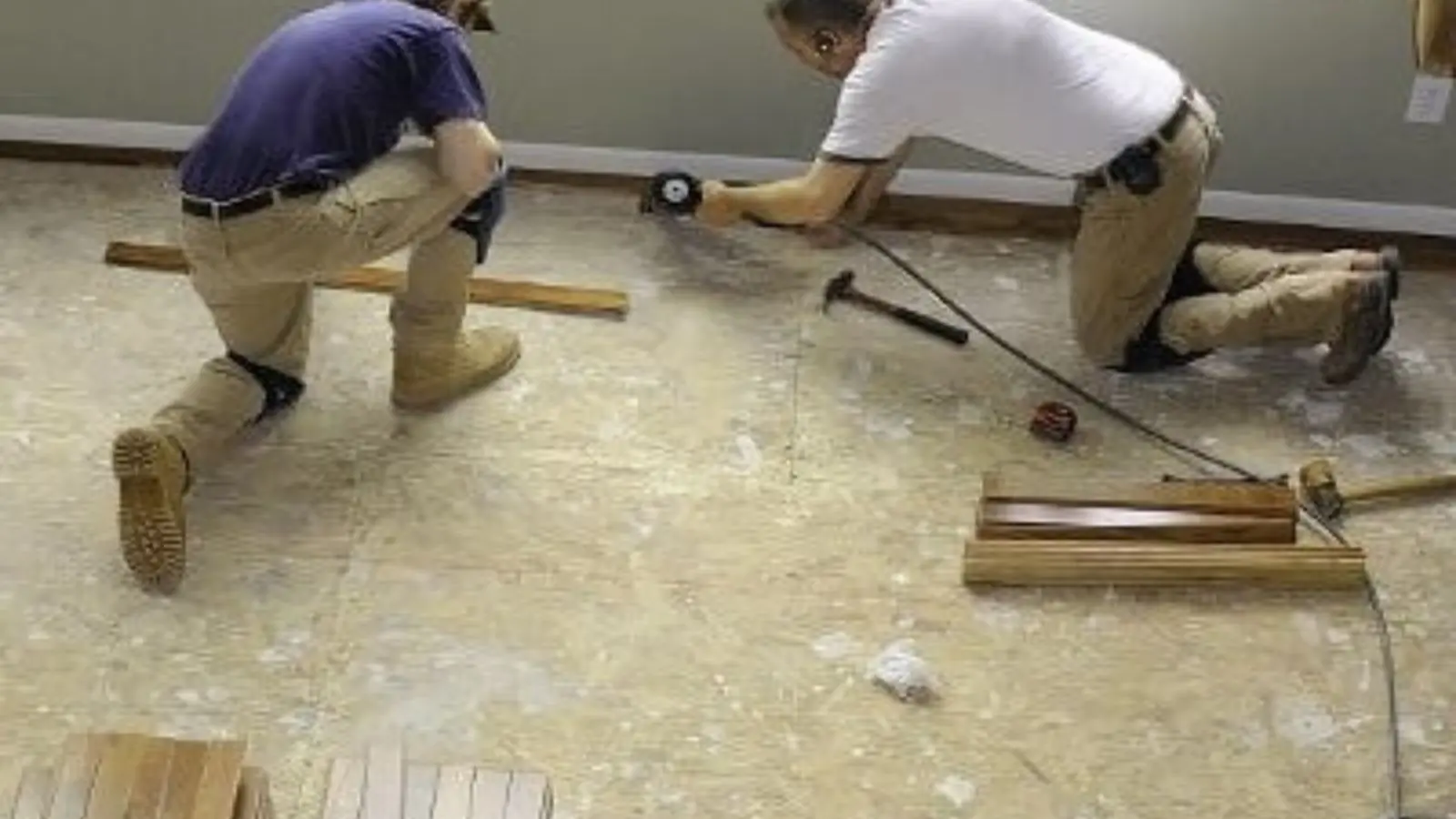
Water damage repair is the rebuilding stage: cutting out ruined drywall, insulation and flooring, then replacing and finishing them once the structure is dry. If you have a stained ceiling, swollen baseboards or a floor that has started to cup, this page explains what gets repaired, what gets replaced and why. Drying comes first, so if anything is still wet, begin with water mitigation and come back here for the rebuild.
Crews are licensed and insured. You get the scope and the price in plain terms before a single board is cut.
Rebuilding is not drying
Repair work starts only after moisture readings show the framing and subfloor are dry. Closing a wall over damp studs traps the water, and no primer or paint changes that. Wet structure belongs to the drying crew, and the rebuild follows.
Signs the Damage Has Reached the Finish Materials
Brown ring stains
A ring that grows after each rain points to a roof or flashing leak, and the drywall face is usually soft.
Bubbled paint
Paint blisters when moisture pushes from behind. If the board feels spongy, the gypsum has lost its strength.
A sagging ceiling
Keep people out from beneath a bulge, since it can release all at once.
Ceiling and Wall Water Damage Repair
Ceilings tell you where the water came from. A roof leak leaves a stain that grows after rain, usually near an exterior wall or a vent penetration. We cut back to dry, firm drywall past the stain edge, replace the insulation above it, and only then patch, texture and prime.
An upstairs toilet leak behaves differently. Water follows the joists, so the stain can show up several feet from the fixture. Depending on whether it was supply water or bowl water, the board may need to be treated as contaminated and removed rather than dried in place.
A collapsed ceiling is the extreme case. We clear the loose drywall and insulation, check the joists and wiring above, and hang new board once the cavity reads dry.
Walls follow the same order: probe, measure with a moisture meter, cut a clean opening, dry the cavity, then close it. Matching an existing texture often takes several coats to blend.
Hardwood Floor Cupping and Drying
Cupping happens when the underside of a board takes on moisture faster than the top. The edges rise and the center dips. It often appears days after a dishwasher or supply line leak, when the surface already looks dry, and the damage is easy to miss at first.
Patience matters here. Sanding too early leaves boards to shrink and gap again as the subfloor finishes drying. We lift a few boards, set drying mats, run LGR dehumidifiers and compare a moisture meter against a dry reading taken elsewhere on the same floor. Many cupped floors need weeks.
Most cupped floors flatten once the wood returns to its normal moisture content. Sanding and refinishing come after that, never before. Boards that are split, crowned or dark at the seams get replaced, and your written scope lists which boards fall in which group. Ask to see the readings behind each call, and ask why.
Ready for a scope for water damage repair?
Call dispatch to talk through the damage. Scope and price are explained before work starts.
Repair or Replace: The Decision by Material
Porous materials are the first to be discarded. The meter reading on your own materials makes the final call.
| Material | Repair or dry in place when | Replace when |
|---|---|---|
| Drywall | Firm, seams intact, no swelling, dried promptly after clean water | Swollen, soft or crumbling, or wet from gray or black water |
| Insulation | Clean batts that stayed only lightly damp | Matted, stained or touched by contaminated water |
| Carpet and pad | Clean water, dried within 24 to 48 hours, subfloor cleaned | Gray or black water, or wet longer than 48 hours. The pad is often replaced anyway |
| Solid hardwood | Light cupping, sound boards, dry subfloor | Crowned, split, dark at the seams, or still cupped after drying |
| Baseboards and trim | Solid wood, dried, cleaned and reinstalled | MDF that swelled |
| Cabinets | Solid wood or plywood boxes that dry out | Particleboard boxes that swelled or came apart |
The written scope lists what is kept and what goes. The readings behind each decision are included.
Slow Leaks That Show Up Late
An air conditioner condensate line that backs up drips quietly into a closet, attic or hallway ceiling, sometimes for weeks. The stain is small and tan, but the board above it can be soft. Someone needs to clear the drain line first, or the new ceiling will stain again.
A siding leak into a kitchen wall is harder to spot. Water runs down behind the cabinets or backsplash, and the first clue is a musty smell or a soft spot near the floor. We open the wall, check the studs and sheathing with a moisture meter, and replace what has softened.
Both are gradual leaks, and policies often treat those differently from sudden damage. Photograph everything before demolition. If we find dark growth in the cavity, the job pauses for mold remediation, because we do not rebuild over it.
How a Rebuild Runs, in Order
Confirm the structure is dry
Meter readings on framing and subfloor must match a dry reference.
Demolish and haul out
Wet drywall, insulation and flooring come out in clean cuts, and open studs are checked for staining or growth.
Insulate, hang and finish
New insulation, drywall, tape, texture, primer and paint go in, in that order.
Floors, trim and cabinets
These go back last so dust does not damage them.
What changes the scope and price
Rebuild scope is set after the damage is measured, not guessed from a photo. Five things move it most.
Water category
Clean supply water leaves more salvageable material than gray or black water.
Area affected
A single wall bay is a different job from a ceiling spanning two rooms.
Materials involved
Solid wood, MDF, laminate and particleboard all cost different amounts to replace.
Drying days and equipment
Repairs wait for drying to end, so a longer drying period delays the rebuild.
Rebuild scope
Texture matching and paint blending add steps beyond the wet material itself.
A homeowners policy may respond to a burst pipe or other sudden event, while slow seepage and long neglect are common reasons claims go nowhere. Read your policy, put the question to your insurer, and take photos before demolition starts.
Want your real number? Call (626) 879-0276 and the scope and price are explained before work starts.
Rebuilding in Glendora: Permits and Licensing
Glendora routes permits and inspections through its Building and Safety Division, located at 116 E. Foothill Blvd. The city site names no specific repairs, so phone the office with your scope before drywall goes up, particularly if wiring or plumbing changes.
Vet any contractor you hire. The state licensing board, CSLB, has a lookup at cslb.ca.gov, and its advice after disasters is a signed contract, a modest deposit and no payment running ahead of finished work. We also rebuild for homeowners in San Dimas, which has its own Building and Safety office on East Bonita Avenue.
Frequently asked questions
The two stages are separate on purpose. Drying through extraction and equipment comes first, and the rebuild is scoped once readings confirm the structure is dry. If you call with wet materials, we start with the drying.
Paint hides the color but not the cause. If the stain keeps growing, the source is still active, and sealing in damp board invites mold. Fix the leak, check the board with a moisture meter, and replace it if it is soft.
Many do once the wood returns to its normal moisture level, but that can take weeks and depends on the species and finish. Sanding too early often leaves gaps later. Boards that are split or dark at the seams are replaced.
The rebuild pauses. Dark growth means the area needs mold remediation first, and the leak behind it must be fixed. Remediation follows ANSI/IICRC S520, a published standard. For health concerns, see a physician, and find out if your state licenses mold contractors.
Yes. Floodwater is Category 3, so porous materials are usually removed and surfaces are cleaned and disinfected before anything is rebuilt. Our flood damage restoration page covers that first stage.
Glendora's website does not say which repairs need approval. Call the Building and Safety Division with your scope, especially when wiring or plumbing is part of the job.
Talk to dispatch
The line is open 24/7. Describe what you see and the next step is explained.