
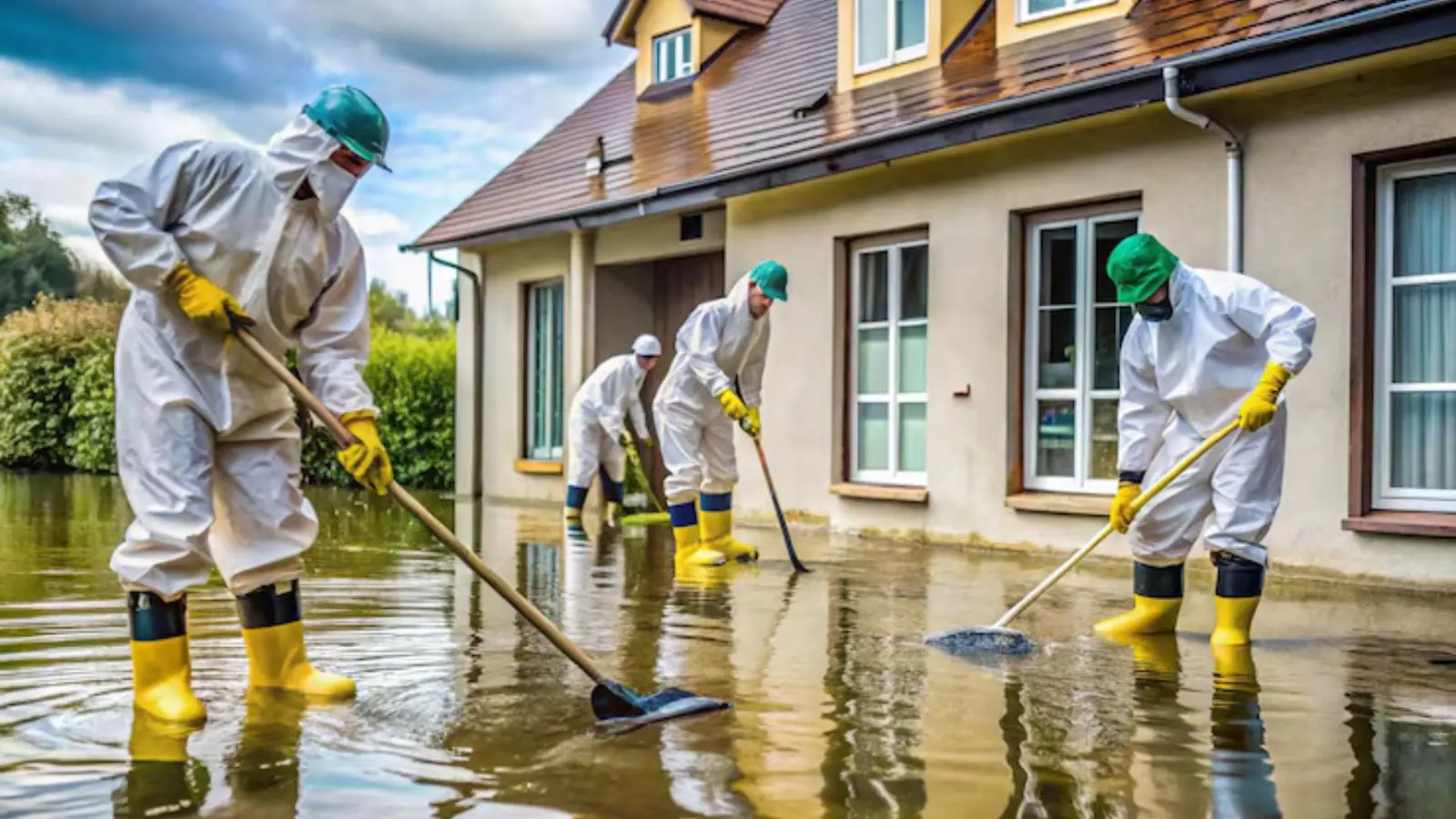
Floodwater inside the house is an emergency, and our 24/7 dispatch line is open at any hour. While you wait, stay out of standing water, keep children and pets away from it, and turn off power to the wet area, but only where the panel sits in a dry spot you can reach safely. Lift valuables off the floor and leave muddy or sewage-smelling water alone.
Emergency flood damage restoration deals with storm, river, groundwater and runoff water that gets into a home, including Category 2 gray water and Category 3 black water. Crews pump it out, remove mud and unsalvageable materials, then clean and dry what stays.
Electrical and gas risk comes first
If water touches outlets, appliances or the panel, stay out of the room. Switch off the main breaker only if getting to it means standing on a dry floor. For sparking, a burning smell or any gas odor, call 911 or the utility first, and the restoration line second.
When Floodwater in Your Home Is an Emergency
Floodwater is almost never clean. Rising water from a storm picks up soil, fuel and sewage on its way, so it is treated as Category 3 black water. Gray water from a failed sump pump or an overflowing washer is Category 2, and it turns worse the longer it sits.
Storms do not keep office hours, and neither does dispatch. Nights, weekends and holidays get the same-day response when available, and the first call sorts out the depth, the source and whether power is a risk so the right pumps are loaded.
- Water is deeper than a few inches or still rising
- Mud, silt or a sewage smell has come in with it
Why Foothill Runoff Is a Local Risk
In 2014 the Colby Fire burned close to 2,000 acres in the hills above town and left slopes mostly bare, officials said. Storms that year pushed mud against a house on Easley Canyon Road, and several streets were impassable until crews cleared them.
The practical lesson is that runoff here carries silt and rock, not just water. Mud dries into a hard layer inside walls and under floors, so it is cleared early, and it affects coverage too, as the cost notes below explain.
Water Category and What It Changes
| Water source | Category | What it means | What is done |
|---|---|---|---|
| Washing machine overflow or sump pump failure | 2 | Gray water, some contamination | Extract, remove wet carpet and pad, clean, dry |
| Storm runoff, rising floodwater, groundwater with soil | 3 | Black water, needs professional cleanup right away | Extract, remove porous materials, clean and disinfect, dry |
| Sewage from a drain or toilet | 3 | Biological contamination, stay out | Containment, protective equipment, removal, disinfection |
Standard drying advice assumes clean water. Floodwater and sewage need a more protective approach.
Basement Flooding Cleanup
We will not tell you basements are common in Glendora, because that is not something we can show. The below-grade spaces that flood here are lower levels, sunken garages, half-height rooms and crawl spaces, and they share one problem: water has nowhere to drain except back out the way it came in.
Crews start with submersible pumps and extraction units, working steadily while the ground outside is still wet so walls are not stressed. Wet drywall is cut back above the waterline, mud is shoveled and washed out, and stored boxes are sorted into keep and discard piles on the driveway.
Dehumidifiers and air movers then dry the slab and framing, and moisture meters tell us when the room is ready. A failed sump pump makes it Category 2 at best, so porous items go. Our page on how structural drying works explains why a garage wall can stay damp for days.
Need flood damage restoration now? Call the 24/7 line.
Dispatch is open around the clock. Scope and price are explained before work starts.
Sewage Backup Cleanup
Sewage is Category 3 black water, and safety comes before cleanup. Stay out of the room and keep children and pets away. If you must enter, wear boots, gloves and eye protection. Keep fans and the HVAC system off, because moving air spreads contamination. Hold off until the water has been confirmed clean.
Most Glendora sewer lines are looked after by a Los Angeles County district (CSMD), and 1-800-675-HELP (4357) is the number it staffs around the clock for backup and overflow reports. Responsibility for the private lateral is not addressed on the city's site, so confirm it before assuming a bill is yours.
Our crews wear protective equipment, set containment barriers, run HEPA-filtered negative air machines where needed, and remove carpet, pad and wet drywall that cannot be cleaned. Hard surfaces are cleaned, disinfected and dried. Night calls are handled the same way, and same-day response depends on availability. Nothing is rebuilt until the area is clean.
How a Whole-House Flood Job Runs
When water covers most of a floor plan, the job is sequenced. That way nothing gets wet twice.
Walk-through and safety
Power, gas smells, depth and contamination are checked first.
Extraction
Pumps start at the lowest point and work upward through the rooms.
Remove what cannot be saved
Carpet, pad, wet insulation and swollen board are cut out.
Clean and disinfect
Mud is washed off framing and slab, and surfaces are treated.
Dry and verify
Air movers, LGR dehumidifiers and daily readings confirm it is dry.
Crawl Space Water
Soft floors or a musty smell through the vents are often the first hints of water below the house. Insulation sags, the vapor barrier shifts, and the subfloor stays damp long after the surface water is gone.
We pump the space out, remove ruined insulation, and dry the framing and subfloor with dehumidification. If wood stays wet for more than 48 hours, we recommend a mold check, and the mold remediation page lays out what that involves.
If Water Is Still Spreading
Safe to do before crews arrive. Each one limits how much material is lost.
Stop what you can
Shut the main water valve if a supply line is involved. Storm water cannot be shut off.
Check power safely
Cut power only from a dry panel you can reach without stepping in water.
Lift valuables
Move papers and electronics onto furniture or an upper floor.
Stay out of the water
It can carry sewage and sharp debris, so keep people and pets clear.
Document the damage
Shoot wide and close-up pictures of the waterline before moving contents.
What changes the scope and price
A flood job is priced after the water, the mud and the materials are seen. These are the main drivers.
Water category
Category 3 floodwater means more removal and cleaning than clean-water jobs.
Affected area
Depth and the number of rooms reached set the pumping and removal.
Materials involved
Carpet, pad and drywall usually go, while slab and framing can be cleaned.
Drying days and equipment
Drying typically runs several days, with equipment sized to the room volume.
Rebuild scope
Once dry, the rebuild is scoped separately.
Flood and mudflow losses are usually carved out of homeowners policies, so storm water often falls under separate flood cover. Review your policy with your insurer, and photograph the damage and write down a scope before cleanup begins.
Want your real number? Call (626) 879-0276 and the scope and price are explained before work starts.
Flood Coverage and Local Resources in Glendora
Insurance rules matter before the pumps start. State insurance guidance says a typical homeowners policy leaves out flood and mudflow, which usually need their own policy. The state defines mudflow narrowly, and slope failures or soil creeping downhill are classed separately. Look your property up on FEMA's flood map, and remember a new federal flood policy normally begins 30 days after purchase.
Rebuilt walls may need a permit, and the city page lists no rules, so raise it with Building and Safety early. The 2014 storms also forced a mandatory evacuation on Ridge View Drive in Azusa, so we take flood calls there too, as our Azusa page describes, and the rebuild afterward is covered under water damage repair.
Frequently asked questions
Nights, weekends and holidays are covered. Same-day response depends on availability. Tell us the depth, the source and whether power is a concern, and we will walk you through what to do while the work is arranged.
Normally no. State guidance says flood and mudflow are typically excluded, which is why people buy a separate flood policy. Your insurer can confirm what yours says, and photos taken before cleanup help.
Rising floodwater and sewage are Category 3, which calls for professional cleanup. Gray water from a washer or sump pump is Category 2, and clean supply-line water is Category 1 but can degrade if it sits.
Small amounts of clean water, yes. Mud, sewage or water deeper than a few inches calls for protective equipment, extraction and a plan for drying wall cavities. If you are unsure, call before you start tearing out anything.
The EPA says to respond within 24 to 48 hours, though mold will not always appear after that window. Materials wet longer than 48 hours or showing growth need remediation guidance instead. See mold remediation for how that works.
Both, in order. The County sewer district help line handles backups and overflows in the main line, and our crews handle the cleanup inside the house, including containment and removal of contaminated materials.
Talk to dispatch
The line is open 24/7. Describe what you see and the next step is explained.