
If water is still moving, treat this as an emergency: dispatch answers 24/7, and there are things to do right now. Close the main water valve, switch off power to wet areas if you can reach a dry panel, lift valuables, and keep people and pets away from contaminated water.
Water mitigation is the work of stopping damage from spreading in the first 24 to 72 hours. It covers shutting off the source, removing standing water, setting drying equipment and mapping moisture so nothing stays wet inside walls and floors.
My Wall Is Still Damp Days After the Leak Stopped. What Now?
A wall that stays damp after the pipe is fixed is holding water in the cavity, where air cannot reach it. Surface dry does not mean structure dry. Pulling that moisture out with controlled drying is what the trade calls water mitigation.
Before you touch anything electrical
Water at outlets, the panel or appliances means stay out of the room. Switch off power only if the panel is reachable on dry ground. Sparking, burning smells or gas odors go to 911 or the utility before the restoration line.
The First 24 to 72 Hours, Step by Step
Every stage sets up the next. Skipping ahead is how pockets of moisture get left behind.
Stop the source
Find the main shut-off and close it. Check fixtures, supply lines and the roof for the cause.
Extract standing water
Extraction units and pumps remove what can be removed, since dehumidifiers cannot dry a pool.
Remove what cannot dry
Wet pad, soft board and insulation come out so they do not hold moisture against the framing.
Set the drying system
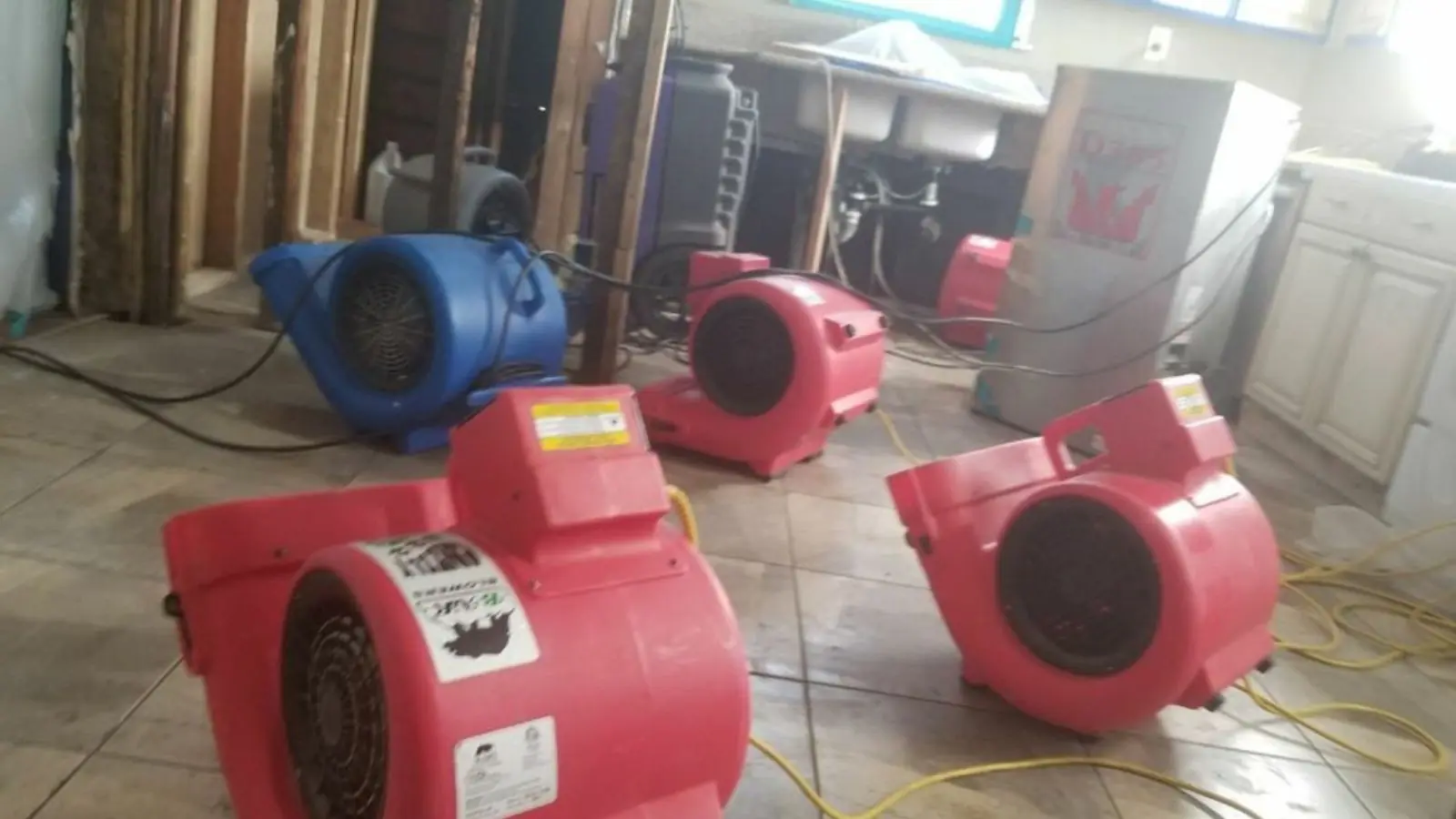
Air movers and LGR dehumidifiers go in, placed from the moisture map instead of guesswork.
Map and monitor
Meters and thermal cameras record where water sits, and the readings repeat every day.
Structural Drying
Structural drying removes water from framing, subfloor and wall cavities, not just the visible surface. Air movers pass dry air across wet materials, and LGR dehumidifiers pull the released moisture out of the air so it does not soak back in. We record moisture readings every day and move or remove equipment as the numbers change on the meter.
EPA guidance puts the window for heading off mold at 24 to 48 hours, and it stresses that this is a rule of thumb, not a deadline. A typical drying window is 3 to 5 days, described as typical and not promised, because dense or thick materials such as framing, hardwood and wet insulation take longer.
A job is complete when the moisture map matches a dry reading from an unaffected part of the home. Before hiring anyone, find out whether their crews follow ANSI/IICRC S500, the published standard for water restoration work, and how they log daily readings.
What Each Piece of Equipment Does
Air movers
Low, wide fans that push air across wet floors and wall bases to speed evaporation.
LGR dehumidifiers
Low grain refrigerant units that keep drying air dry enough to keep absorbing water.
Extraction units
Truck-mounted or portable vacuums that remove standing water and wet carpet water.
Moisture meters
Probes that read moisture inside wood, drywall and concrete.
Thermal imaging cameras
Reveal cool, wet areas behind surfaces so we know where to probe.
Need water mitigation now? Call the 24/7 line.
Dispatch is open around the clock. Scope and price are explained before work starts.
What Moisture Readings Tell Us
Readings are compared with a dry reference taken from an unaffected area of the same material. Each row is a common pattern.
| What we see | What it usually means | What happens next |
|---|---|---|
| Reading close to the dry reference | Material is dry or nearly so | Equipment is moved or removed |
| Reading falling a little each day | Drying is working | Equipment stays, readings continue |
| Reading flat for two days | Water trapped or humidity too high | Adjust airflow, open cavities, add dehumidification |
| Cold patch on thermal camera | Wet area behind the surface | Probe with a meter, then open if needed |
| Reading high after 48 hours of clean water | Higher risk of mold growth | Remove porous material or call for remediation guidance |
What a Drying Equipment Rental Request Really Needs
Callers sometimes ask us for a rental dehumidifier or a few fans. We do not rent equipment, and a rental unit alone often fails because nobody mapped the wet areas first.
A real request needs four things: where the water went, which materials are wet, how many air movers and dehumidifiers the volume needs, and someone reading the meters each day. That is the drying plan we write, and it is why equipment without monitoring tends to dry the air while the wall stays damp.
Finding the Shut-Off in Glendora
Glendora's city system runs about 224 miles of mains to roughly 13,000 accounts, but a few Glendora homes buy water from Azusa. Read the name on your bill so you know whom to call before an emergency.
The city water office, at 116 E. Foothill Blvd, is open Monday to Friday and the city site lists no after-hours water line. That means the shut-off valve at your house is the quickest tool you have, so find it today.
If Water Is Still Spreading
Dispatch arranges crews while you limit the damage. Evenings and weekends are no exception, and that includes after hours when crews are available.
Close the main valve
Turn the main water shut-off fully off, and open one tap to relieve pressure.
Cut power with care
Turn off breakers for wet rooms, but only from a dry panel.
Lift contents
Move rugs, boxes and electronics out of the wet area.
Soak up the pooling
Use towels or a wet vacuum on clean water, but leave sewage alone.
Take photos
Photograph the source, the water line and affected materials before moving things.
What changes the scope and price
Mitigation scope grows with the amount of water. It also grows with the time it has been sitting.
Water category
Whether the source was clean, gray or black determines what is dried and what is thrown out.
Affected area
More rooms and wall bays mean more equipment placements.
Materials involved
Hardwood, plaster and thick framing hold water longer than carpet.
Drying days and equipment
Each day of drying uses the same equipment, so longer drying costs more.
Rebuild scope
Mitigation keeps the rebuild smaller by saving materials that can dry.
Homeowners policies often cover sudden and accidental water damage, while gradual leaks and neglect often fall outside them. Ask your insurer and check your policy. Photos and a written scope help.
Want your real number? Call (626) 879-0276 and the scope and price are explained before work starts.
Utilities and Nearby Towns
Some Glendora addresses are served by Azusa Light & Water, a groundwater-based utility, rather than the city system. If your bill comes from Azusa, the shut-off request goes to them. We also work on the Azusa side of the line, see our Azusa coverage.
Once drying is verified, rebuilding work can begin. With floodwater or sewage involved, flood response covers the safety steps that come first.
Frequently asked questions
Yes. Nights, weekends and holidays are all covered by dispatch, and same-day help is offered when crews are available. Give us the source, the rooms affected and whether the water has stopped, and we will advise on next steps while the crew is arranged.
Water inside a wall cavity cannot reach moving air, so it lingers behind intact drywall. A meter and an infrared camera will locate it. Controlled drying, sometimes with openings cut into the wall, solves it.
A typical window is 3 to 5 days, which is typical and not a promise. Hardwood, plaster, thick framing and wet insulation can take longer, and daily readings tell us when it is dry.
We do not offer rentals. A drying job needs a moisture map, correct equipment placement and daily readings, and that is a mitigation service, not a rental.
Visible growth changes the job. We point you to mold remediation, and the area must be dried and the leak fixed first. Ask any company whether it works to ANSI/IICRC S520, and take health questions to a physician.
If it is clean water and the carpet is dried within 24 to 48 hours, often not. Gray or black water, or longer wetness, usually means the carpet and pad are discarded.
That depends on the source. Check your water bill for the utility, or the city page for sewer contacts. Our crews handle what is inside your home.
Talk to dispatch
The line is open 24/7. Describe what you see and the next step is explained.