
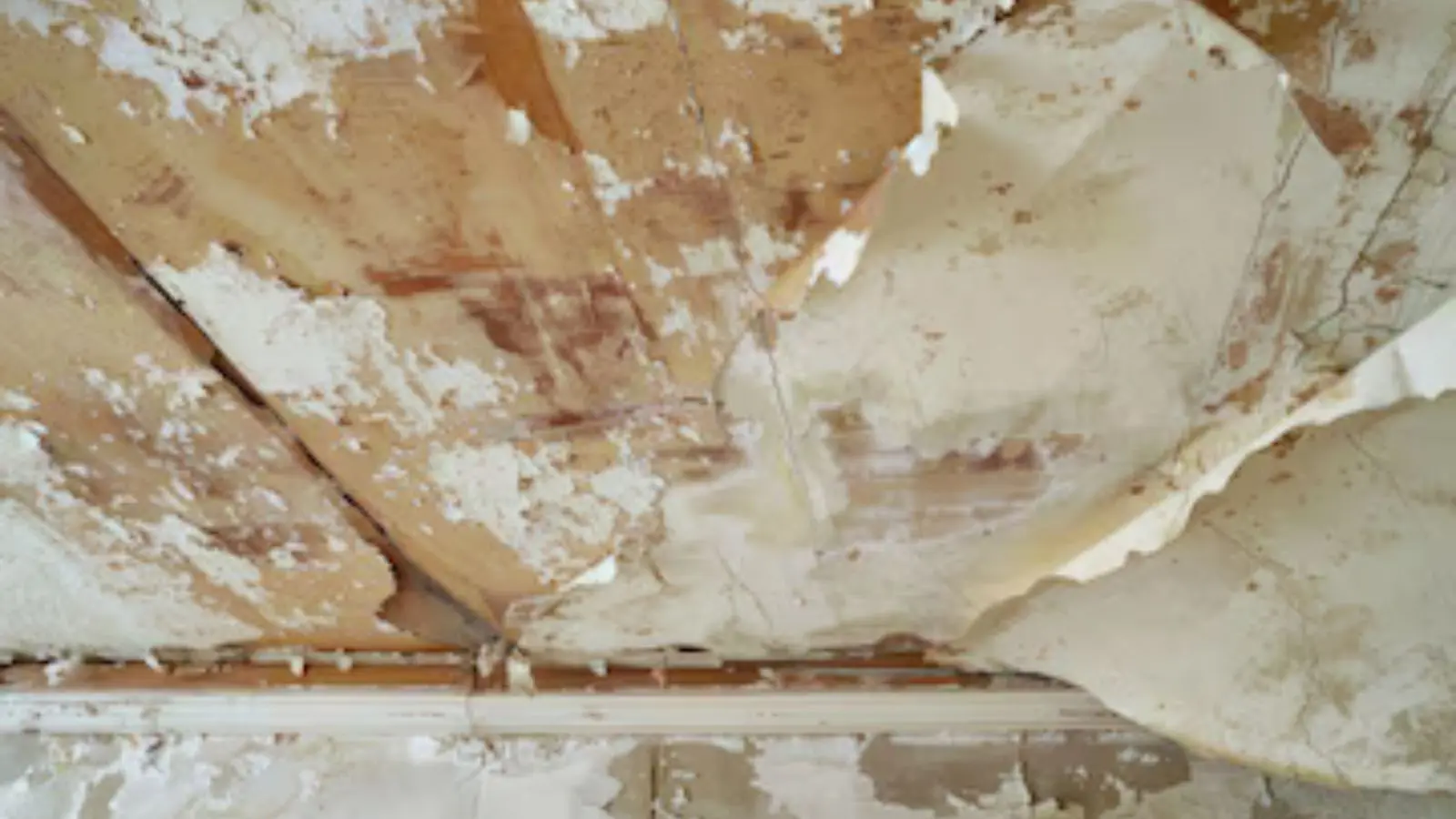
A leaking roof sends water through the deck, insulation and drywall until the ceiling stains, sags or drips. The brown ring you see is usually the smaller part of the problem, because water runs along rafters and pools above the board before it shows. The visible brown ring is usually the smaller part of the problem, because water travels along rafters and pools above the drywall before it shows.
Which trade goes first matters more than how fast any one trade works. The roofer stops the entry, the dryer removes the water, and only then does anyone close up drywall. The roofer stops the entry, the dryer removes the water, and only then does anyone close up drywall. This post covers the water side of that sequence.
A bulging ceiling is holding water
A ceiling that bows downward, feels soft or shows a dark bubble is holding water above the drywall. The weight of a few gallons can bring a section down without warning. Keep people and furniture out from under it.
If the sag is dripping, set a bucket below and relieve the pressure on purpose rather than waiting for a collapse. Put a tarp on the floor, stand to the side of the bulge and not under it, and use a screwdriver to poke a small hole at the lowest point of the bubble. The water drains into the bucket in a controlled stream.
Wear eye protection, since drywall bits and insulation fall with the water. If a light fixture sits in the wet area, do not touch it. Turn off that circuit only from a panel you can reach on dry floor.
The repair order, from entry point to paint
Each step depends on the one before it, and skipping ahead usually means redoing work.
Stop the entry
A roofer finds the failed flashing, cracked tile or lifted shingle and seals or tarps it. Without this, every later step gets wet again.
Remove trapped water
Relieve any bulges, mop the floor, and use an extraction unit on soaked carpet or hard flooring below.
Open the ceiling
Cut out wet drywall past the stain until you reach dry, firm board. Remove wet insulation, since it holds water against the framing.
Dry the cavity
Air movers and LGR dehumidifiers run until the joists and the underside of the deck read dry on a moisture meter.
Check with imaging
A thermal imaging camera scans nearby ceilings and walls for cool, wet patches that were not obvious.
Close up and finish
Drywall, texture and paint come last, after the framing is dry and the roof is confirmed sealed.
What gets removed and what stays
Drywall that is swollen, sagging or stained through is usually replaced. Per the EPA, wallboard can stay and dry in place only when it shows no obvious swelling and its seams hold. A brown ring that has dried and left a firm surface may be treated differently from a soft bubble.
Ceiling tiles are porous, and the guidance is to discard them if they stayed wet or show growth. Fiberglass insulation that got soaked loses its loft and holds water, so it comes out too. Dry insulation a few feet away can often stay.
Cutting a clean opening costs less than it sounds, since drywall is patched in squares. A hole 12 to 18 inches past the visible stain is a common starting point. The inspection tells you where to stop cutting.
The upstairs toilet leak variant
Not every ceiling leak comes from the roof. A toilet supply line or a wax ring that fails upstairs can drip into the ceiling below for hours before anyone sees a stain. The first clue is often a stain in a pattern that follows the bathroom's footprint.
This water starts clean, but a leak at the toilet bowl base can carry waste, so ask a professional to look before you wipe it up with bare hands. If the water came from the bowl or drain, treat it as contaminated until told otherwise. A leak from the supply line is clean water and follows the same dry-in-place rules as a roof leak.
Questions about your own situation?
Call dispatch to talk through what you are seeing. Scope and price are explained before work starts.
Ceiling symptoms and what they mean
| What you see | What it usually means | First move |
|---|---|---|
| Brown ring, dry and firm | Old leak that stopped | Mark the edge, find the entry, have the area read with a meter |
| Bubble or sag | Water pooled above the drywall | Relieve it into a bucket and keep people out below |
| Drip during rain only | Roof entry point | Tarp or call a roofer, then dry |
| Drip when someone upstairs uses water | Plumbing leak above | Shut the fixture valve, call a plumber and a dryer |
| Stain that keeps growing after rain stops | Wet insulation still releasing water | Open the ceiling and remove the insulation |
Glendora note: permits for roof work
On its Building and Safety page, Covina names re-roofs and minor mechanical, electrical or plumbing jobs as express permits. Larger projects there go through plan check. That is Covina's rule and not Glendora's, so treat it only as a nearby example of how one city sorts small jobs from larger ones.
The useful step for a Glendora roof is a call to Building and Safety at City Hall, asking if the roof work needs a permit. The division's page names itself as the place to start for permits and inspections, yet it lists no repair rules. Ask before the roofer starts, and ask whether the ceiling work is covered as part of the same job.
Checklist before the repair crews arrive
This list takes about twenty minutes and covers what most adjusters and crews ask for first.
- Photograph the stain, the bulge and the room contents before you move anything.
- Move furniture and electronics out of the wet zone and cover what you cannot move.
- Note when the leak started, whether it follows rain, and which fixtures upstairs were in use.
- Keep any removed tile or drywall pieces for the adjuster until the claim is settled.
- Do not paint over a stain until the cavity has been read dry.
- Ask each trade what it needs to finish before the next one starts.
Honest limits
We handle the water side. We do not repair roofs, and a dryer cannot tell you why a roof leaked. A licensed roofer does that, and both trades should confirm the entry is sealed before drywall goes up.
If rain is still coming in, emergency water removal is the first call for water pooled on the floor. After the roof is sealed, the cavity and the rebuild fall under damage repair. The same order holds for houses in San Dimas and Azusa.
Mold removal is its own scope with its own containment, and it is not covered here. If you see growth, ask about mold remediation as a separate step.
Frequently asked questions
It is safer than letting it fall, if you do it correctly. Stand to the side, wear eye protection, put a bucket and tarp below, and keep the hole small at the lowest point. Stay away if a light fixture or wiring is in the wet area.
Most cavities need several days of airflow and dehumidification. The EPA uses 24 to 48 hours as the window to begin, not to finish. Readings in the joists tell you when it is done.
Only the wet part. Insulation that is dry and has held its loft can stay. A thermal imaging camera and a meter show where the wet insulation ends.
Both can start on the same day. The roofer must stop the entry before drywall closes up, and the dry crew should read the cavity before the roofer covers anything from above.
Sudden failures are often covered, and slow leaks or neglect often are not. Read your policy, take photos, and ask your insurer what they need to see.
The city page we read lists no re-roof rule. Covina treats re-roofs as express permits, which tells you nothing about Glendora, so call the Glendora division and ask.
Talk to dispatch
The line is open 24/7. Describe what you see and the next step is explained.