
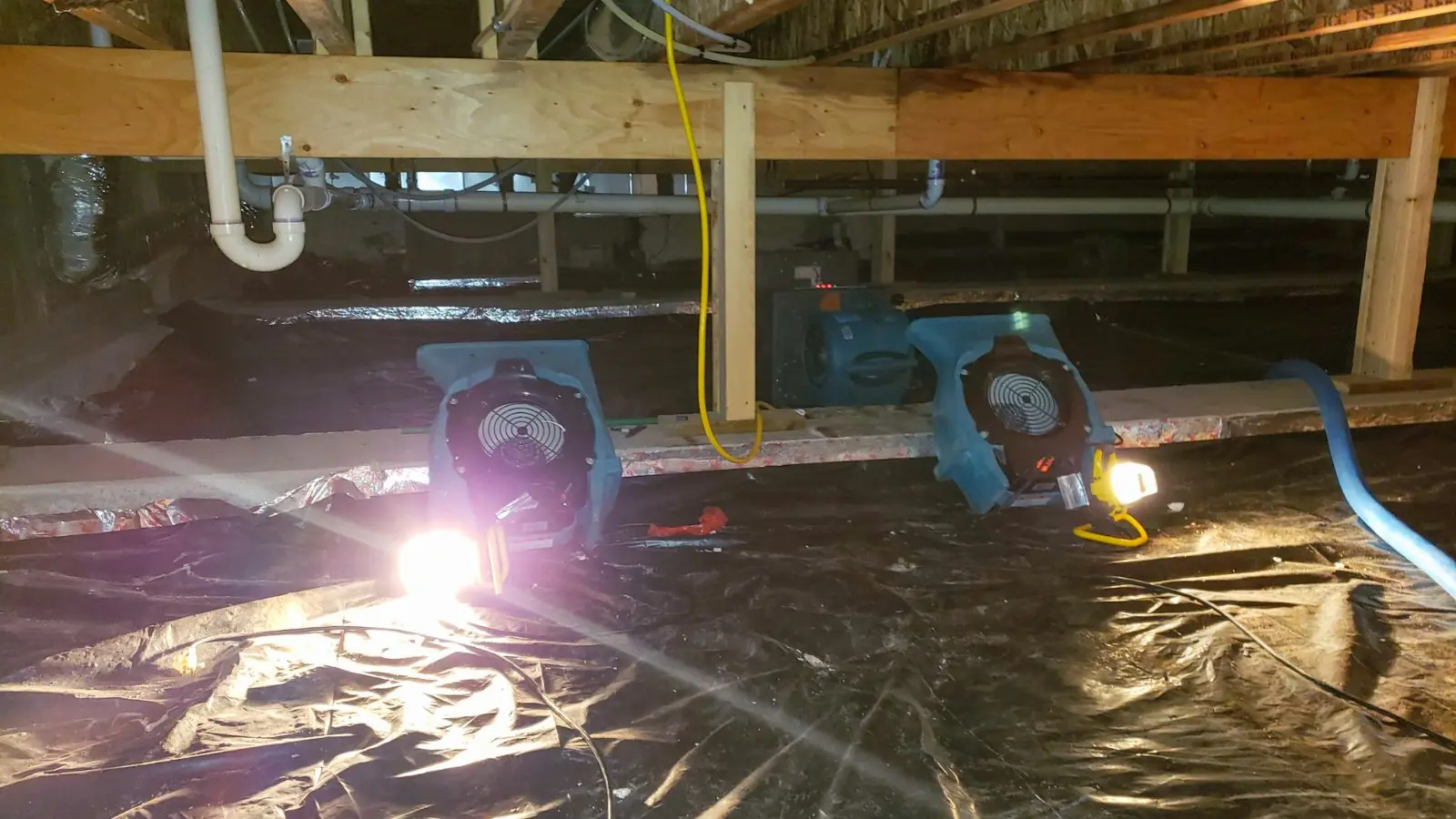
Water under a raised floor usually comes from a plumbing leak, a broken irrigation line or a failed backflow device, and it can be standing or just seeping. It is easy to miss because nobody goes down there until a floor feels cold, a smell rises through the vents, or the water bill jumps.
Mold needs moisture, so the job is to find the source and dry the space before wet wood stays wet. This post covers pumping, insulation and vapor barrier decisions, framing readings, and where the work stops.
How water gets under a house
The usual culprit is a pipe. A pinhole in a copper supply line, a cracked drain, or a water heater relief line that ends in the crawl space can run for weeks. The floor above may feel fine while the joists below sit in damp air.
Irrigation is the second common source. A broken sprinkler riser or a backflow preventer that fails near the foundation wall can push water along the outside of the stem wall and through vents. A running meter with every fixture off is the first sign that something outside the house is leaking.
A third source is outside water, which is a different problem. Rain runoff, groundwater and slope drainage belong to drainage contractors and engineers, not to a drying crew. We tell you which one you have by tracing where the water first appears.
What a crawl space inspection looks at
Standing water depth
Measured with a tape. A film of water on soil needs a different plan than two inches against the piers.
Framing moisture
A moisture meter on joists, sill plates and the underside of the subfloor shows which wood is truly wet.
Vapor barrier state
Plastic sheeting that is torn, shifted or pooled with water traps moisture and needs to be lifted.
Insulation condition
Batts that sag, stain or hold water are marked for removal.
Air and odor
A damp, earthy smell and a thermal imaging camera help locate cool wet patches.
How we dry a wet crawl space
The sequence follows the water, from the biggest volume to the smallest.
Shut off the source
A plumber fixes the pipe, or you close the irrigation valve at the riser. A dryer cannot win against a running leak.
Extract standing water
A submersible pump or an extraction unit pulls water off the soil. The EPA advises removing standing water with an extraction vacuum before drying.
Remove wet insulation and loose barrier
Wet batts get cut down and bagged. Torn plastic is rolled back so the soil can release moisture.
Dry the air and framing
Air movers and LGR dehumidifiers run through the vent openings or access hatch until joist readings fall.
Reseat the barrier
Once the soil surface is dry, the vapor barrier is laid back with seams overlapped.
Insulation and vapor barrier decisions
Fiberglass batts under a floor are the first thing to fail when wet. They sag, pull away from the joists, and hold water against the subfloor. If they stayed wet beyond the 24 to 48 hour guideline, they come out and are replaced after the framing is dry.
A vapor barrier is plastic sheeting laid over soil to slow moisture rising into the space. If it is intact and the water ran on top, it can sometimes be dried and left. If water got under it, the sheet is lifted, the soil dried, and the sheet put back.
New insulation goes in last. Putting batts back before readings drop traps wet air against the floor above. The sequence matters more than the material.
Questions about your own situation?
Call dispatch to talk through what you are seeing. Scope and price are explained before work starts.
Readings, ventilation and the cavities above
Framing readings give you the finish line. Joists and the sill plate should read close to dry wood from another part of the house, and a thermal imaging camera helps confirm no wet patch is hiding. If readings stop falling after several days, the source is probably still active.
The EPA also advises ventilating wall cavities when water has moved upward, and crawl space water can wick into the bottom of exterior walls. Removing a section of baseboard or cutting a small opening lets air reach the cavity. Wallboard that is swollen is replaced instead of dried.
Run fans under the house only once the water is known to be clean. With sewage or an unknown source, the EPA wants protective equipment worn and the area sealed off, and fans wait.
Glendora note: whose meter and main
A City of Glendora Water Division page gives about 13,000 accounts fed through 224 miles of water main, plus a water office at 116 E. Foothill Blvd open weekdays from 8am to 5pm, with no after-hours water line shown.
The Azusa city site adds that Azusa Light & Water reaches some Glendora homes too, so your bill tells you which utility to contact. A leak on the street side of the meter is the utility's job. On the house side, close the valve you own and call a plumber. A meter that keeps turning with every fixture off is the evidence to show either one.
Flood water is a different job
If water entered from rising groundwater or storm runoff, it is a flood and not a plumbing leak, and flood water is usually Category 3. Ask your insurer whether you carry separate flood coverage, and search your street address on FEMA's flood map. California's insurance department, on its FloodFacts page, states that a standard homeowners policy leaves flood out.
Checklist before anyone goes under the house
- Turn off the main or the irrigation valve and watch the meter for movement.
- Do not enter if the space smells of gas or has water near wiring. Call 911 or the utility first.
- Photograph the access hatch, the visible water line and any stained wood.
- Note when the bill rose or the smell started.
- Ask each company which standards it follows, such as S500 for water and S520 for mold.
- Keep a plumber and a drying crew on the same timeline.
Honest limits
This is not drainage or foundation engineering. If the water keeps coming back after a pipe is fixed, a licensed drainage or foundation professional should look at grading and runoff. Our crews dry what got wet and report what the readings say.
If framing was wet for a long time, mold remediation may be the right scope, with containment and HEPA filtration. A fresh release starts with water mitigation. Addresses in Azusa and Covina use the same sequence. Before hiring, find out whether your state licenses mold work.
Frequently asked questions
Look for a musty smell, a cold floor, or a bill that jumped. With the fixtures off, a moving meter points to a leak. Open the hatch and use a flashlight, but only if the space is safe to enter.
A pump removes standing water but not the moisture in the soil and wood. Without dehumidification, the framing can stay damp for weeks. Readings tell you when it is done.
If it is torn or water got underneath, usually yes. If water ran on top and the sheet is intact, it can often be dried and reused. The crew should show you which case you have.
Then it is a drainage or flood issue, not a plumbing one. Check FEMA's map for your lot, read your policy, and bring in a drainage professional. We can dry the space after the water source is handled.
No, but wet wood left wet gives it a place to start. The EPA calls 48 hours a rule of thumb and says growth does not always follow it. Drying early is the way to avoid the question.
Your water bill shows whether the City of Glendora Water Division or Azusa Light & Water serves you. The city office keeps weekday hours and lists no after-hours line, so close the valve you own and call a plumber.
Talk to dispatch
The line is open 24/7. Describe what you see and the next step is explained.