
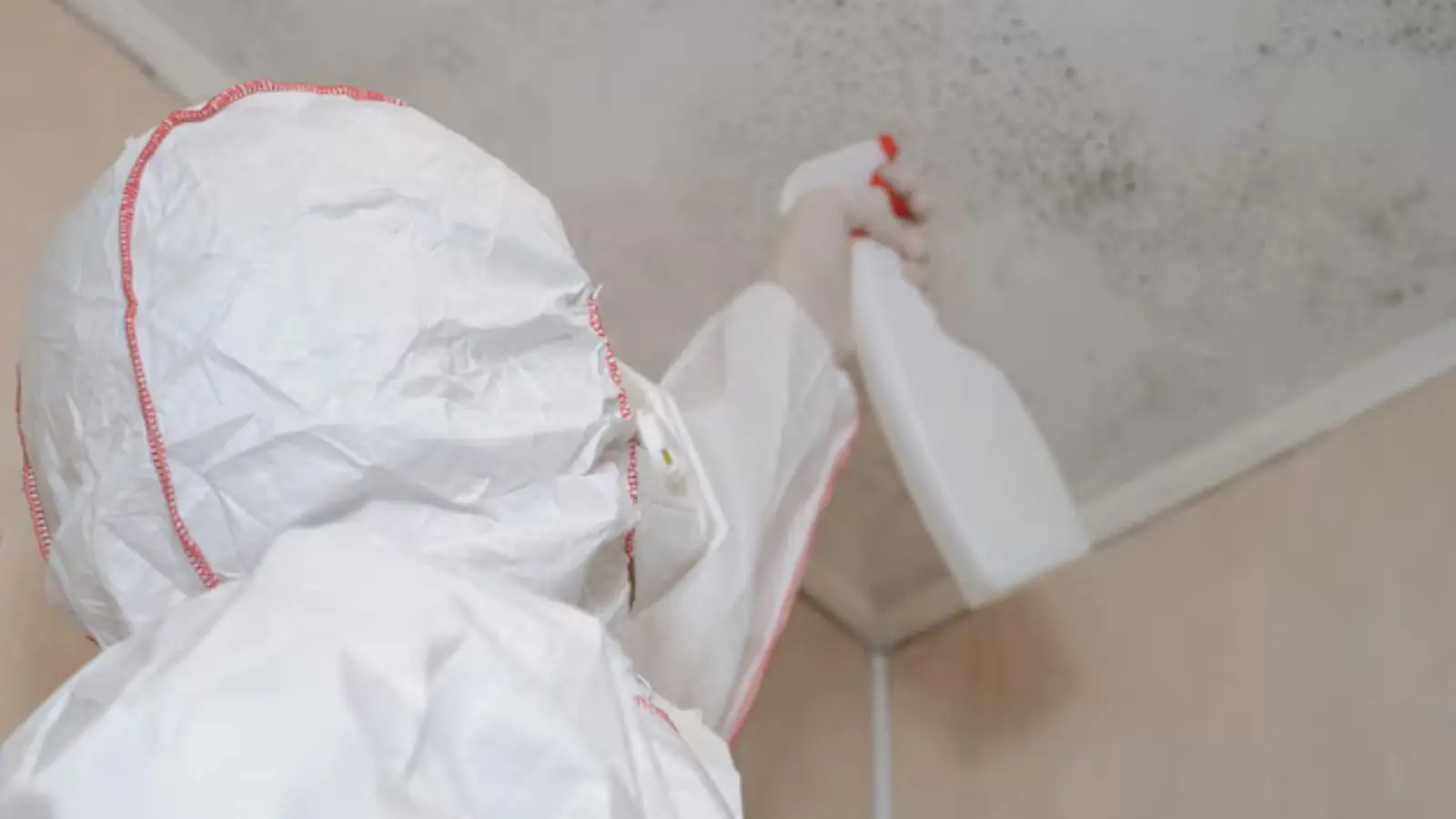
To remove mold from a ceiling and keep it gone, the dampness behind it has to end first, because growth feeds on wet drywall and paint. A small gray freckle on a painted bathroom ceiling is a different job from a soft, stained patch below a leaking pipe.
This guide sorts ceiling mold into three groups: surface growth you can wipe, material that has to be cut out, and situations where a trained crew with containment is the safer call. Each group has its own tools, its own limits and its own next step.
Fix the Moisture Before You Touch the Mold
Scrubbing a ceiling while the cause is still active is wasted effort. Mold needs moisture, so the first task is finding where the water comes from. Common sources are a bathroom fan that vents into the attic instead of outdoors, a cold supply line sweating above the ceiling, a slow drip from a toilet seal in the room above, or a roof leak that travels along a rafter.
Pairing a moisture meter with an infrared camera speeds the search, because wet drywall reads cooler and shows a clear edge on the camera. At home, press a clean fingertip on the stain. Cool and slightly soft means the material is still taking on water.
What You See, What It Likely Means, What To Do Next
Use this table as a first sort. It cannot replace a look at the room by a trained person with a meter.
| What you see | What it likely means | Next step |
|---|---|---|
| Gray or black dots on a painted bathroom ceiling, dry to the touch | Surface growth from steam and weak ventilation | Fix the fan or vent, then wipe small areas with detergent and water and dry fully |
| Dots along a straight line where the ceiling meets the wall | Condensation on a cold edge or poor airflow in a corner | Improve airflow, add insulation if the attic side is bare, monitor for a month |
| Brown ring with dark spotting, ceiling slightly soft | A leak above, wet enough to saturate the drywall | Stop the leak, call for a moisture reading, expect the panel to be cut out |
| Bubbling or peeling paint with a musty smell | Water trapped behind the paint film | Do not scrub. Have the area opened and checked |
| Sagging section or cracked tape seam | Drywall has absorbed enough water to lose strength | Keep people out from under it and call a restoration crew |
| Growth spread across a wide area or several rooms | A larger moisture problem than a household wipe job covers | Bring in a crew that works with containment |
A Surface Wipe Job Versus Drywall That Has To Come Out
A wipe job fits when the growth sits on the paint, the board is firm and dry, and the area is small. Dampen a cloth with detergent and water, work in small passes, and bag the cloth right away. Let the ceiling dry fully, ideally with a fan running, then check it again after a week.
Drywall comes out when it is soft, swollen, stained through, or wet for longer than the 24 to 48 hour window EPA gives for drying. Paper facing on drywall is porous, so growth that has reached the paper is not something paint or cleaner will fix. Ceiling tile and insulation above it follow the same rule.
If you cut in and find growth on the back side or on the joists, stop. That is where one patch becomes a larger scope.
- Wipe job: small, dry, firm board, growth only on the paint
- Cut-out: soft, swollen, stained through, or damp for days
- Crew job: growth on framing, insulation involved, or a wide stain
Containment and Removal, Step by Step
Dry mold fragments are light and travel on air. Whether you handle a small patch yourself or hire the job out, the order of work matters.
Stop the water
Shut off the supply line, repair the fan duct or arrange the roof fix. Without this step everything below is temporary.
Seal the room
Close the door, tape plastic sheeting over doorways and vents, and turn off the central air so it does not carry fragments through the house.
Wet the surface lightly
A fine mist keeps dust down while you work. Never dry-scrape a ceiling.
Remove or clean
Wipe small surface growth. For damaged drywall, cut out a clean margin past the visible edge and bag the pieces inside the room.
Capture the fines
A vacuum with a HEPA filter picks up what a rag misses. Professional crews pair this with a negative air machine that pulls room air through filtration and out of the containment zone.
Dry and recheck
Run air movers or fans and a dehumidifier until a moisture meter shows normal readings, then patch and paint.
Questions about your own situation?
Call dispatch to talk through what you are seeing. Scope and price are explained before work starts.
Glendora Notes for Ceiling Leaks
Glendora's city water office publishes figures for its system: roughly 13,000 meters and 224 miles of mains. For a ceiling stained by a supply line, the useful part is your own meter. Close every fixture, watch the dial, and if it keeps turning the leak is live.
Before you cut out a big section of ceiling, particularly with wiring or ducts overhead, phone the city permit office to learn whether the repair needs one.
When a Professional Is the Right Call
Call a crew when the stain is wider than a few feet, the drywall is soft, the leak was never found, the growth keeps returning after a clean, or you are not sure what is above the ceiling. Our mold remediation work follows the published ANSI/IICRC S520 standard, a fair point to raise with every bidder. Health questions belong with a physician, not with a contractor.
Closets, Condensation Lines and the Rebuild
Closet ceilings collect trouble because the air is still and the surface is cool. A dark line that follows a joist often means warm indoor air meeting a cold spot, not a leak. Keep stored items off the walls and the door open more often.
When a leaking pipe was the source, the rebuild is a second job. Our water damage repair crews replace cut-out board, then tape, texture and paint to match. Neighbors in Azusa and San Dimas get the same sorting process.
Before You Start: A Short Checklist
Run through this list before you pick up a rag or call anyone.
- Photograph the stain from two angles with a ruler or coin for scale
- Note the date you first saw it and any recent rain, showers or plumbing work
- Check the room above for a wet floor, a loose toilet or a damp wall
- Wear a snug respirator, gloves and eye protection for any hands-on work
- Cover floors and furniture, and keep children and pets out of the room
Honest Limits
No cleaner removes growth that has reached the inside of drywall, and painting over a stain only hides it. We also cannot tell you from a photo whether a ceiling is salvageable. A meter reading and a look above the board settle it.
Frequently asked questions
Painting hides a stain but leaves the growth and damp material underneath. Clean or remove the area first and let it dry fully.
Detergent and water is the usual choice for small, hard surfaces. On porous drywall, bleach does not reach growth below the surface. Ask a professional about the cleaner that fits your material.
Soft spots, swelling, a sag, a stain that has soaked through, or material that stayed wet beyond roughly 48 hours usually means replacement. A moisture meter confirms what the surface hides.
The cause is usually humidity that never leaves the room. Check that the fan vents outdoors, runs well after a shower, and moves air. A fan that ends in the attic just relocates the moisture.
With every fixture and appliance off, watch your meter for movement. If it keeps turning, water is escaping somewhere, which fits a stain that keeps growing. Check which utility bills you before you call about a main-line problem.
If it is a few inches wide, dry and firm, many homeowners handle it with detergent and a fan. If it is damp, spreading or recurring, a crew can map the moisture.
Talk to dispatch
The line is open 24/7. Describe what you see and the next step is explained.