
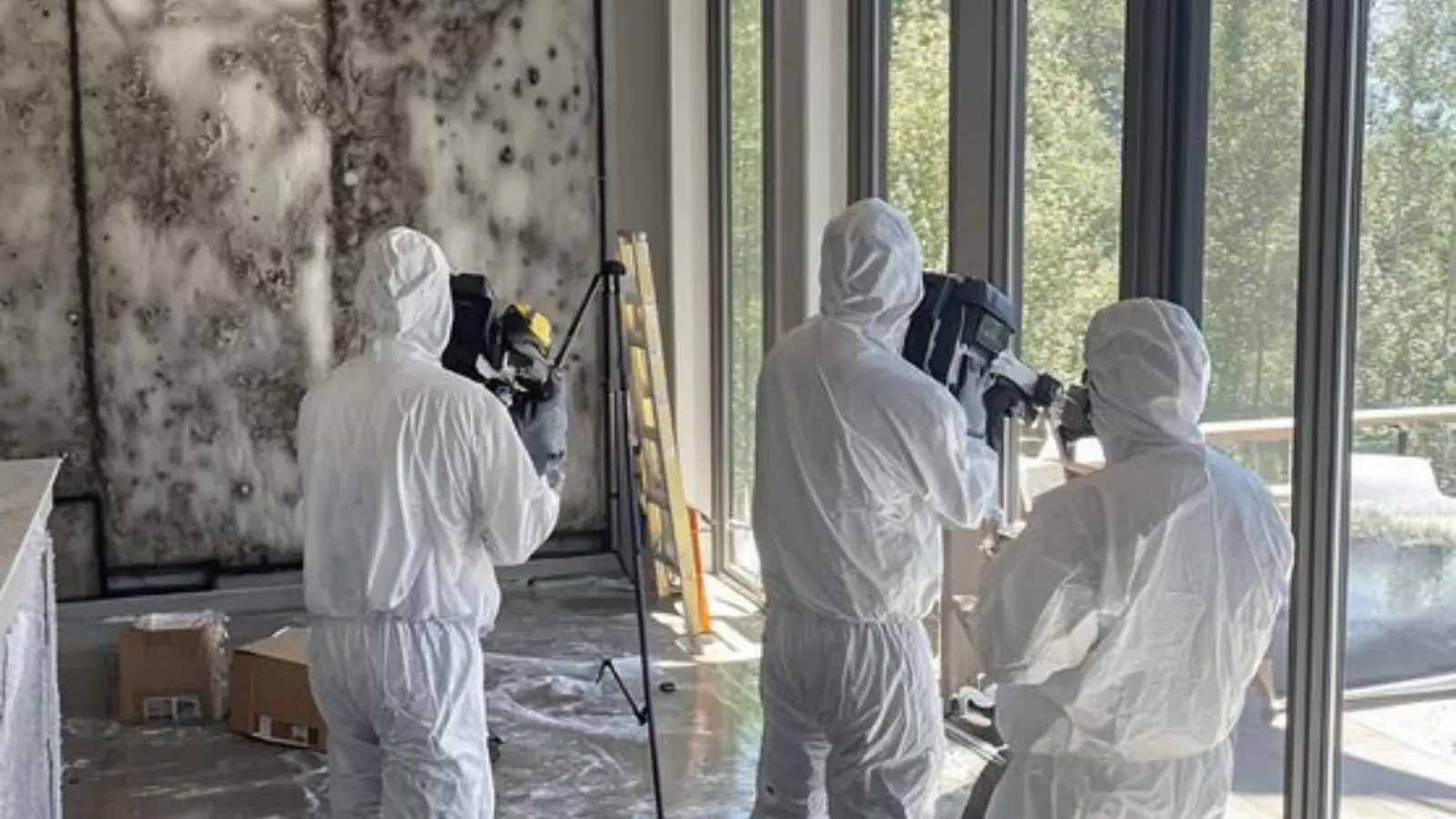
After remediation, a clearance check records whether the work area is clean and dry enough to be closed back in. Callers tell us a common scene: a buyer's lender will not move forward until the mold is dealt with, and the seller has no idea where to start. The answer is a sequence, with separate people doing separate parts.
This guide lays out that sequence for Glendora sellers and owners refinancing. It covers what to keep on file, how to plan the timeline without guessing at days, and what nobody can promise you.
Why Three Separate Parties
A sale or loan file gains credibility when no one grades their own work. An inspector finds and documents the problem. A remediation contractor fixes it. An independent tester checks the result. If one company does all three, the reader of your report has to take its word for everything.
Separation also protects you. The inspector has no reason to inflate the scope, the contractor has no reason to skip the final check, and the tester has no stake in the removal. Whether a buyer, agent or lender accepts a particular report is their decision, and we cannot predict it.
The Sequence From Finding Mold to Clearance
Follow the order. Skipping ahead is the usual reason files stall.
Fix and document the leak source
A tester cannot clear a room that is still getting wet. Have the plumber, roofer or window installer repair the cause, and keep the invoice. A moisture meter log from the drying stage backs it up.
Get an independent inspection
A separate party looks at the area, takes moisture readings and, where doubt exists, samples. Ask for a written report with photos and a floor plan marked with the affected spots.
Obtain a written remediation scope
The contractor spells out each room, how the area will be sealed off, what gets removed, and how it will be dried and cleaned. Ask whether crews work to ANSI/IICRC S520 and how the scope follows it.
Complete the remediation
Sealed barriers, filtered air exhaust, removal of damaged material, then air movers and dehumidifiers to dry it all. Take your own before and after photos.
Order clearance testing
The independent party returns after the work is dry and the area is cleaned. They inspect visually and may sample, then issue a written result.
Package the file
Send the sale or loan contact one organized set of documents, not a pile of loose emails.
What Clearance Testing Is and Is Not
Clearance usually combines a visual inspection with moisture readings and sometimes air or surface samples. Its purpose is to compare the finished area with a baseline, such as unaffected rooms or outdoor air, and record the result in writing.
It does not declare a house spore-less, since spores exist everywhere, and it cannot promise that moisture will never return. It also does not replace the lender's own requirements, so ask the buyer's agent what the lender wants to see before you hire anyone.
Paperwork Worth Keeping
Build one folder, digital or paper, before the first call. It makes every later conversation shorter.
- Dated photos from first discovery through finished repairs
- Plumber, roofer or HVAC invoice for the source repair
- Inspector's report and any lab results
- The signed remediation scope and contract
- Moisture logs or drying records from the crew
- The independent clearance report
- Permit and final inspection records, if a permit applied
Questions about your own situation?
Call dispatch to talk through what you are seeing. Scope and price are explained before work starts.
Who Does What in the Sale File
| Step | Who should do it | What you should receive |
|---|---|---|
| Source repair | Plumber, roofer or other trade | Invoice and a note of what was fixed |
| Inspection | Independent inspector or tester | Written report, photos, moisture readings |
| Removal and drying | Remediation contractor | Signed scope, work photos, drying records |
| Clearance | Same independent party, not the contractor | Written clearance statement and any lab data |
| Rebuild | Repair contractor | Invoice and permit records if applicable |
Glendora Notes: Permit Records in the File
The permit office, described on the city's own website, handles inspections and runs a web portal for plan checks. Nothing on that page says which repairs require a permit. If your rebuild opens walls, ask the division whether yours does, and if one was issued, save the closed inspection record.
Buyers and lenders sometimes ask for proof that repairs were done properly, and a permit record is the easiest proof to hand over.
Planning the Timeline Without Guessing at Days
Every step has its own schedule: the trade repair, the inspector's availability, the crew's drying time, a lab's processing and the follow-up visit. Wet materials take as long as they take, and EPA's 24 to 48 hour window is for catching problems early, not for finishing the job.
Plan backward from the closing date and add room. Tell your agent early that an inspection and remediation are in progress, and ask each party for its next available opening rather than a promise. Our mold remediation team schedules around the independent tester, so mention the deadline when you call.
When Water Is Still the Problem
Clearance only works on a dry building. If the cause is an active leak or recent flooding, water mitigation comes first, because drying equipment stops the damage from spreading while paperwork catches up. We also work with owners in San Dimas and Covina who face the same sale pressure.
Honest Limits
We cannot tell you which lender, buyer or agent will accept a given report. We also cannot clear our own work and call it independent. A clean result reflects conditions on the day of testing, and it should be paired with a fixed moisture source and ongoing attention to humidity.
Health questions about a property belong with a physician and your own advisers, not with a contractor.
Frequently asked questions
It is a check by an independent party, after remediation, that the area is clean, dry and ready to close up. The result is written and usually includes photos and readings.
It can, but an independent party carries more weight in a sale file because no one is grading their own work. Ask your agent which approach the other side expects.
That is up to the lender. Ask the buyer's agent or loan officer exactly what they require before you order anything.
It depends on the leak repair, the size of the area, drying and lab turnaround. Ask each party for its schedule and plan the closing date with extra room.
Disclosure rules are a matter for your agent or a real estate attorney, and we do not give legal advice. Keep your records complete and ask them what applies.
Yes, if a permit applied. The city's permit office handles inspections, and a closed inspection record is useful to hand a buyer.
Talk to dispatch
The line is open 24/7. Describe what you see and the next step is explained.