
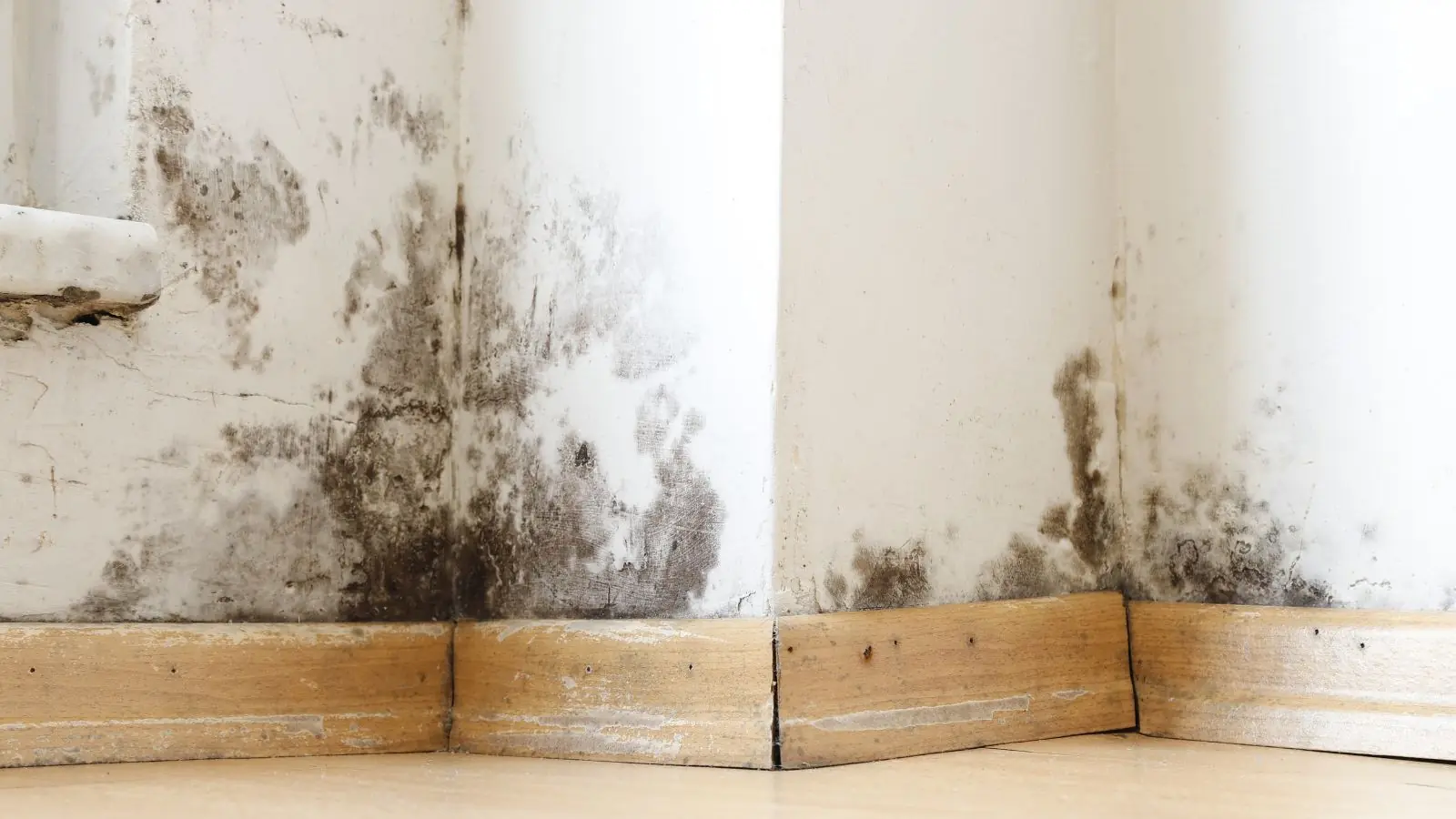
Getting rid of mold on wood depends on two answers: how far the growth reached, and which kind of wood you have. A dark film on the surface of a solid fence board is a cleaning job. Fuzzy growth that has swollen a plywood subfloor is a replacement job.
Clean up mold on wood in the right order and the work is simple. Fix the water, dry the wood completely, remove the growth with the right method for that material, then finish and monitor. This guide covers framing lumber, subfloors, decks, fences and furniture, and says where a trained crew is the safer choice.
Where the Wood Is Changes the Plan
The same growth calls for different handling depending on what the wood does in your house.
Framing lumber
Studs, joists and rafters are solid wood. If they are still firm, they are usually cleaned in place and dried rather than torn out.
Subfloors and sheathing
Plywood and OSB soak up water and swell at the edges. Once they delaminate or feel spongy, they are cut out and replaced.
Decks and fences
Exposed boards are rained on, so a green or black film is common. Scrubbing and a dry spell usually handle it unless the board is soft.
Furniture and cabinets
Solid wood pieces can be cleaned and dried outdoors. Veneer, particleboard and upholstered parts often are not worth saving.
Surface Growth Versus Deep Growth
Press a screwdriver tip into the wood. If it resists like fresh lumber, the growth is likely on the surface. If the tip sinks in, the fibers are breaking down and the board has lost strength.
Surface growth sits on the grain and wipes or brushes off to a stain. Deep growth turns the wood dark through its thickness, smells musty even after cleaning, and often comes with soft areas. Once a structural board has lost strength, it needs a repair plan, which is where our water damage repair team comes in.
Color can mislead. Some staining is a mineral or tannin reaction and will not wash out even when no growth is left.
Dry First, Then Clean
Cleaning wet wood spreads the problem and pushes water deeper. EPA guidance gives 24 to 48 hours as the window for drying wet materials, and longer exposure raises the chance of growth. Use fans, a dehumidifier and open windows, and confirm with a moisture meter that the wood has dried before you work on it.
A pin-type meter reads framing and subfloors directly. A thermal imaging camera helps trace damp wood behind drywall without cutting into it.
How To Clean Mold Off Solid Wood
Use these steps for firm lumber, deck boards and solid furniture. Work outdoors when you can.
Protect yourself and the room
Put on a fitted respirator, gloves and goggles. Plastic sheeting over doorways keeps loose fragments from drifting.
Vacuum with a HEPA filter
Run it over the surface first. A standard shop vacuum can blow fine particles back into the air.
Scrub with detergent and water
Use a stiff brush, work along the grain and keep the wood only lightly damp. Wipe with clean cloths and bag them.
Remove stubborn growth
Sanding, wire brushing or a media method takes off the top layer that holds the growth. See the section below.
Dry completely
Fans and a dehumidifier again until a meter shows normal readings.
Seal or finish
Use a primer or a sealant made for that material once the wood is fully dry.
Sanding, Blasting and Other Media Methods in Plain Words
Sanding removes a thin layer of wood and the growth with it. It makes airborne dust, so crews contain the work, run a negative air machine with HEPA filtration and vacuum as they go. Wire brushing is a slower variation for rough framing.
Media blasting uses a fine material, such as baking soda or dry ice, shot at the surface. The media lifts growth from grooves and corners that sanding misses. It is used on framing in attics and crawl spaces and is a job for equipment and containment, not a weekend project.
Questions about your own situation?
Call dispatch to talk through what you are seeing. Scope and price are explained before work starts.
Why Bleach Is Not the Plan
Wood is porous, and bleach is mostly water. The liquid soaks in, lightens the surface, and leaves the roots of the growth untouched while adding moisture to the board. It can also bleach the color of the wood.
For that reason most restoration crews rely on cleaning, drying and material removal. Ask any company what products it plans to use on your wood and why, and request the answer in a written scope.
Solid Wood Versus Sheet Goods
Plywood, OSB, particleboard and MDF are glued layers or fibers. When they stay wet, they swell and weaken, and growth can run between the layers where no brush reaches. The usual answer is cut-out and replace, with a margin past the visible edge.
Solid lumber can usually be cleaned, because growth stays near the surface. The test is firmness and moisture reading, not the look. If part of a subfloor is soft, replacing that portion beats patching a problem that keeps recurring.
Glendora Notes: Foothill Wood and Wet Soil
Local TV coverage (an ABC7 report) of the 2014 Colby burn storms told how debris flows reached Glendora streets. On Easley Canyon Road one home had roughly four feet of mud piled behind it, and some got indoors. The practical lesson for wood is that soil or mud packed against siding, fence posts and deck framing keeps them damp for long periods.
If your home sits near the foothills on the north edge of town, pull soil and debris back from wood, and check the bottom rails of fences and the base of deck posts after a wet winter. Wet wood at ground contact is where growth usually starts.
Sealing and Moisture Follow-Up
Sealant protects clean, dry wood, but it does not replace moisture control. Decks and fences need drainage, spacing off the soil and airflow underneath. Inside, framing needs the leak fixed and humidity under control.
Check the area again after a week, then after the next heavy rain or shower season. A returning stain in the same place points to a moisture source you have not found yet.
A Quick Checklist
Use this list before and after the cleanup.
- Find and stop the water source first
- Probe the wood for softness and measure moisture
- Decide: clean (solid, firm) or replace (sheet goods, soft areas)
- Dry fully before scrubbing, sanding or sealing
- Bag cloths and debris inside the work area
- Recheck in a week and after the next wet spell
When To Call a Crew
Call a crew when framing is affected, growth covers a large area, the wood is soft, or a subfloor is involved. Our mold remediation work follows ANSI/IICRC S520, the published industry standard, and it is fair to put that question to every bidder. We also travel to San Dimas and Covina, so tell us where the home is when you call.
We cannot judge structural strength from a photo, and no cleaning method makes failed wood sound again.
Frequently asked questions
Dry the wood, vacuum with a HEPA filter, scrub lightly with detergent and water, and dry again. Light sanding takes care of stubborn spots. Avoid soaking the board.
Only surface growth on dry, firm plywood. If it swelled, delaminated or stayed wet more than a couple of days, replacement is normal.
Neither is the plan crews rely on. Both add moisture. Detergent, drying and removal of the top layer are the standard approach.
Not necessarily. Firm lumber is often cleaned and dried in place. Softened or crumbling studs and joists need a repair plan.
Let it dry out, brush it with detergent and water, rinse lightly and let it dry again. Seal once it is dry, and clear soil and plants away from the boards.
Mud held against siding, fence posts or deck framing keeps wood damp for long periods. That is why pulling soil back and checking low wood is a sensible habit near the hills.
Talk to dispatch
The line is open 24/7. Describe what you see and the next step is explained.