
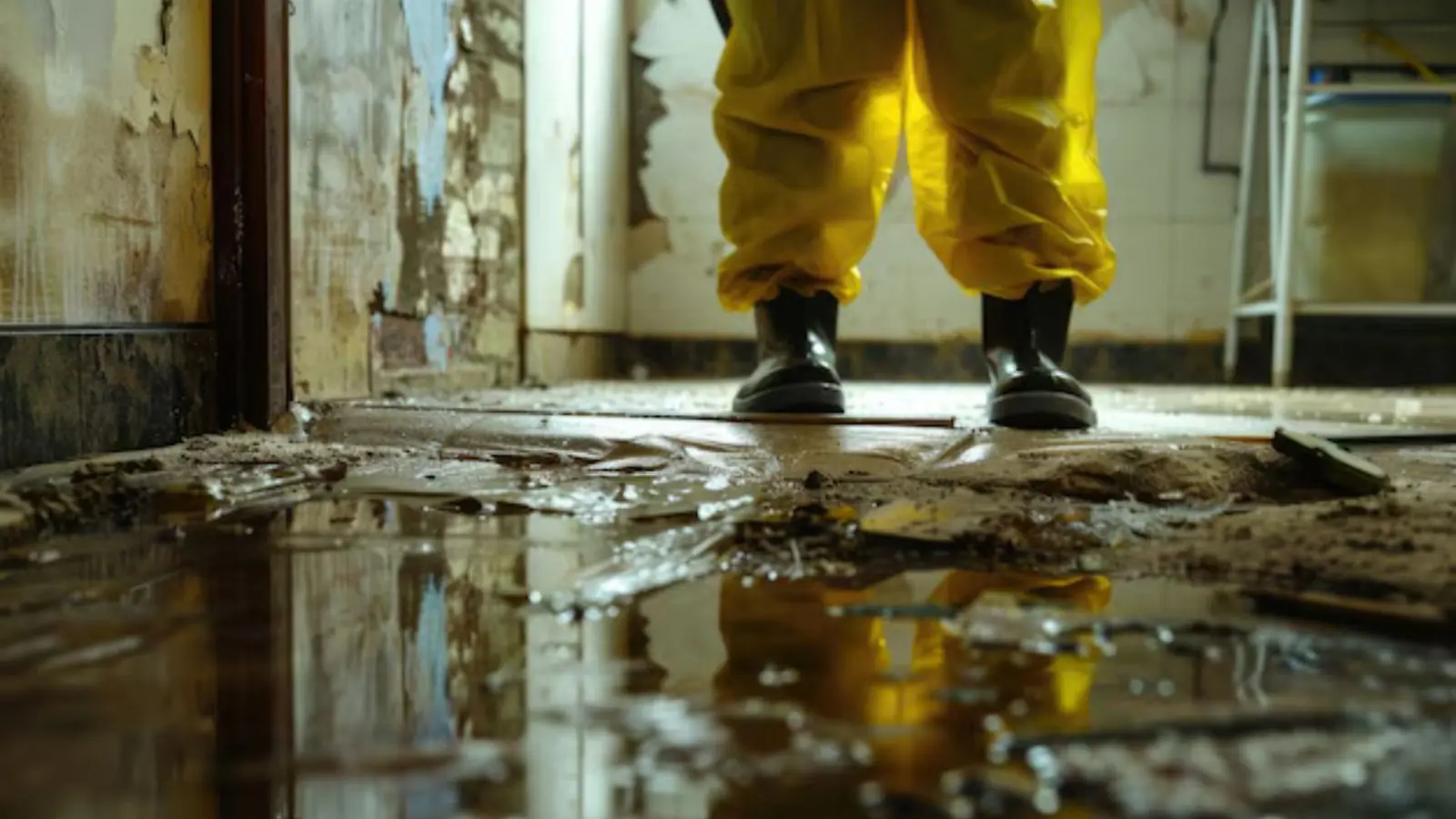
Cleanup after a foothill mudslide starts with a hard rule: stay out of moving mud and out of any room where more could arrive. These surges carry mud, rock and charred brush down steep slopes, and they can shove through doors, garages and fences. Once the flow has stopped and officials say the area is safe, the work becomes extraction, removal and drying.
We dispatch 24/7. While you wait, stay uphill of the flow path, keep children and pets out of the mud, and photograph from a safe distance.
What happened in 2014 and why it still matters
Close to 2,000 acres burned in the Colby Fire in early 2014, and officials described the slopes over Glendora as mostly bare afterward. Storms that same year sent mud down local streets. One early-morning surge reached the 1100 block of Easley Canyon Road, where a house took roughly four feet of mud against its back wall and some got inside.
That detail is the pattern to plan for. Mud does not need a front door to come in. It leans on a back wall, finds a vent, a sliding track or a garage threshold, and then spreads across the lowest floor.
What mud does inside a house
Mud is heavy, abrasive and full of fine silt. Each of those traits causes a different kind of damage.
It packs into flooring
Silt works into carpet backing, tile grout, wood seams and the gap under baseboards, where a mop cannot reach.
It holds water against walls
Wet silt stays damp against drywall and plaster, which keeps wallboard wet long after the surface looks clean.
It weighs on structures
Several inches of mud on a floor add serious load. Cabinets and doors can shift or jam.
It carries what the hillside held
Runoff picks up soil, ash, debris and whatever lay in its path, so it is treated as contaminated.
It clogs drains and sumps
Silt in floor drains and crawl spaces blocks the exits for water that came with it.
Why mud is handled differently from clean water
A supply line leak and a mud intrusion can fill a room to the same depth and still need different plans.
| Question | Clean supply line leak | Mud and debris flow |
|---|---|---|
| Water category | Category 1 at the source | Treated as Category 3, like other floodwater |
| First job | Extract and start drying | Remove solids first, then extract, then dry |
| Equipment | Extraction units, air movers, LGR dehumidifiers | Same plus shovels, pumps, protective gear and containment |
| Porous materials | Often dried in place | Carpet, padding and soaked wallboard are usually removed |
| Fans early on | Usually fine | Held until the area is cleaned and the water is known to be clean |
EPA drying instructions assume clean water. Contaminated water, it says, calls for protective gear, containment and an experienced professional.
Safe first steps after a debris flow
Take these in order and stop whenever something feels unsafe.
Wait for the all clear
Do not enter flowing mud or standing in the flow path. Follow evacuation orders and return only when officials say so.
Cut power only if it is safe
If mud reached outlets or the panel and the panel is dry and safe to reach, shut off the main breaker. If it is not, keep clear and phone 911 or the utility first, then call us.
Check for gas smells
If you smell gas, leave and call the gas utility or 911 from outside.
Photograph from the doorway
Record mud depth with a tape measure or a known object, plus high-water lines on walls and contaminated contents.
Wear boots, gloves and a respirator
Mud may carry sharp debris and contamination. Do not wade in without protection.
Call for extraction and removal
Heavy mud, standing water and packed silt call for crews with pumps, extraction units and containment.
Questions about your own situation?
Call dispatch to talk through what you are seeing. Scope and price are explained before work starts.
How the work is done
Crews usually shovel and bag the heaviest solids, then use extraction units to pull standing water and slurry. Floors and wall bases are rinsed and extracted again until the silt is gone. Flood damage restoration work then removes carpet, padding and soaked lower drywall, since those materials hold contaminated moisture.
Drying follows cleaning. Moisture meters and a thermal imaging camera map where water traveled, and air movers and LGR dehumidifiers dry what is staying. Where cleanup overlaps with ordinary water damage cleanup, the two jobs are staged so contaminated areas are sealed off from clean ones.
Glendora debris basins and what they tell homeowners
This section comes from an ABC7 news report. In December 2014, county Public Works crews emptied debris basins in the Glendora foothills before the next storms, planning to remove as much as 45,000 cubic yards of accumulated rock, mud and sediment gathered over the previous month.
The practical point: a basin only catches what reaches it. Mud still reached that house on Easley Canyon Road, and a later storm blocked Sierra Madre Avenue, Glendora Avenue and part of North Rainbow Avenue until crews cleared them. If you live near the foothills, know your uphill route out and keep copies of your insurance policy and photos of your home's condition outside the house.
Insurance note: mud has a definition
The state insurance department defines mudflow as a river of liquid and flowing mud on the surfaces of normally dry land areas. It says landslides, slope failures and soil soaked with water that moves down a slope are not classified as mudflows. Ordinary homeowners policies commonly leave out both flood and mudflow. Ask your insurer how yours treats each, and run your address through the FEMA flood map.
Honest limits
Cleanup cannot protect a house from the next storm. We do not build retaining walls, divert channels or approve slopes. We can remove mud, dry the structure and give you documentation, and nearby towns face the same slopes, so we also serve Azusa and San Dimas when storms hit.
Frequently asked questions
Small amounts outside the house, with boots, gloves and a respirator, can be a reasonable start. Mud inside is treated as contaminated, so heavy loads and soaked materials usually call for professionals with protective gear.
It carries soil, ash and debris and is handled like other floodwater, which is Category 3. The agency's drying instructions assume clean water, so cleaning comes before fans.
State insurance officials say homeowners policies commonly omit flood and mudflow, with flood protection sold on its own. The exact wording of your policy governs, so ask your insurer.
Only if the panel is dry and safe to reach. If mud or water reached the panel or outlets, stay out and call 911 or the utility first.
EPA guidance sets a target of 24 to 48 hours for acting on water damage. With mud, cleaning and removal come first, then drying.
Yes. ABC7 reported that a storm during that burn-area season also led to an evacuation order in Azusa, covering the east side of Ridge View Drive, and it was lifted afterward.
Talk to dispatch
The line is open 24/7. Describe what you see and the next step is explained.