
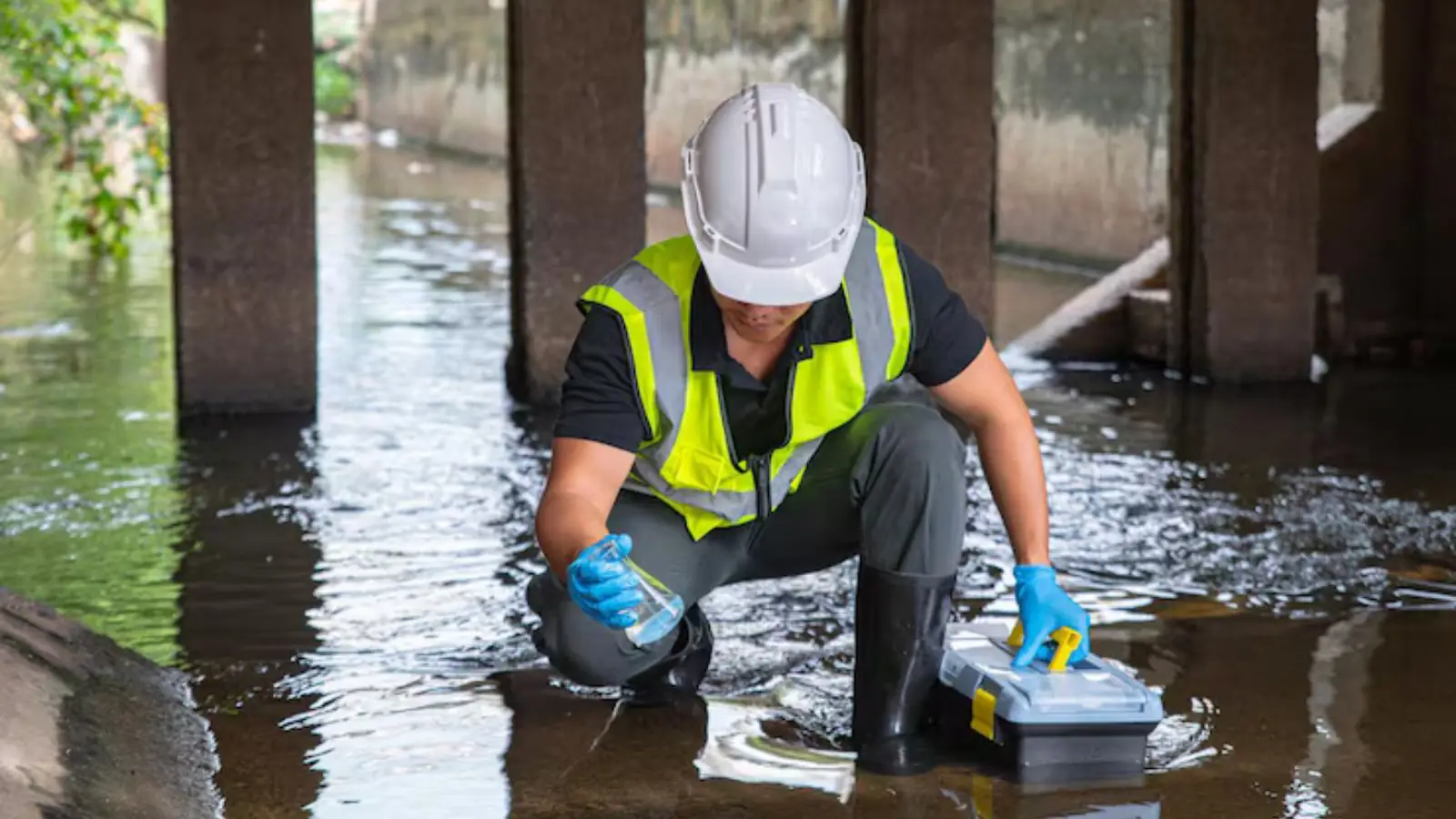
If raw sewage is coming up through a floor drain, tub or toilet, the first job is to leave the room. Treat everything the water touches as contaminated and keep people and pets away. Wastewater pushed back from the sewer line is what the trade calls Category 3, or black water.
Our dispatch line answers 24/7. While you wait, do not flush, run the washer or use sinks, because every gallon adds to the backup. Do not run fans, and do not wade in barefoot.
Safety first
If water is near outlets, cords or the panel, do not touch anything. Kill the main breaker only when the panel is dry and you can get to it without wading. If not, call 911 or the electric utility before you call the restoration line. Leave if you smell gas.
While you wait: what to do and not do
Stop adding water
Ask everyone to stop flushing, showering and running appliances until the line is cleared.
Keep people and pets out
Close doors to the affected rooms. Children and pets should stay in a clean part of the house.
Protect your hands and feet
If you must cross the area, wear rubber boots and gloves. Wash with soap and clean water afterward.
Photograph from the doorway
Record the depth, the source and what the water reached. Do this before anything is removed.
Call the sewer help line
Phone the county sewer district at 1-800-675-HELP (4357). Report the backup so they can check the public line.
Call for Category 3 cleanup
The sooner contaminated materials come out, the less they absorb. Crews wear protective suits and seal off the work zone.
Why the fans stay off
It is tempting to open windows and point a fan at the wet floor. Do not. EPA drying advice covers clean water only. For sewage it asks for protective equipment and barriers, and it says to keep fans off until the water is known to be clean.
Fans push contaminated moisture and particles into clean rooms and into the air you breathe. Cleanup follows a sequence: extract the water, remove what cannot be saved, clean and disinfect, then dry. Flood damage restoration crews follow that order for a reason.
What gets removed and what can be cleaned
Porous materials absorb contaminated water, while hard sealed surfaces can often be cleaned. The table shows typical outcomes.
| Material | Typical outcome | Why |
|---|---|---|
| Carpet and padding | Removed and discarded | Both soak up contaminated water and cannot be reliably cleaned |
| Wallboard | Cut out above the wet line, often higher | Wicks moisture upward and holds contamination |
| Upholstered furniture | Usually discarded | Fabric and foam absorb and hold the water |
| Ceramic tile and sealed hard floors | Often cleaned and disinfected | Nonporous surfaces can be washed, though grout and subfloor need checks |
| Solid wood and cabinets | Case by case | Depends on finish, depth and time wet |
| Cleanable hard goods | Cleaned and disinfected | Glass, metal and hard plastic wash well |
Wallboard that sat in sewage rarely gets a second chance. Insurers and adjusters will want to see photographs of what was removed, so keep them.
Questions about your own situation?
Call dispatch to talk through what you are seeing. Scope and price are explained before work starts.
What the crew does on site
The crew sets up containment barriers to seal the affected zone and wears protective suits, gloves and respirators. Extraction units remove standing water. Solids are bagged, and damaged flooring and the lower portion of drywall are cut out and hauled away.
Surfaces are then cleaned and treated with antimicrobial products, and the area is dried with air movers and LGR dehumidifiers. Moisture meters confirm the structure is dry before anything is rebuilt. If your home needs immediate pumping, emergency water removal comes first, then the cleaning begins.
Who handles sewer backups in Glendora
This section relies on the City of Glendora website. Glendora describes its sewers as mainly maintained through a county agency, the LA County sewer maintenance district known as CSMD. Backups and overflows go to the district's round-the-clock line at 1-800-675-HELP (4357). Questions about sewer plans go to Glendora Public Works.
The city site is silent on who owns or must repair the private lateral between your home and the main line, so we will not claim an answer either. Raise it with the district and the city when you report the backup, and ask your insurer whether your policy includes water backup coverage.
Honest limits
We clean and dry the house. We do not unclog or repair sewer lines, and we cannot tell you whether a blockage is public or private. A plumber or the district handles the line. After cleanup, ask whether the crew works to the S500 standard, and ask the city's permit office before rebuilding whether the work needs a permit.
Neighbors and nearby towns
A backup affects more than one house on the same line. If your neighbors have the same problem, report it together to the district. We also serve homes in Covina and San Dimas, and our dispatch answers around the clock.
Do not return to normal use until a professional says the area is clean and dry. A room that looks fine may still hold contaminated materials in the wall base or under flooring.
Frequently asked questions
Report it to the county sewer district at 1-800-675-HELP (4357), the line the city lists for backups and overflows. Then call our dispatch line for the cleanup. Call 911 first if there is any electrical or gas risk.
Small, contained spills on hard surfaces can be handled with protective gear. A real backup is Category 3, and the EPA says to consult an experienced professional and use protective equipment and containment.
We cannot say. The city site does not state who owns the private lateral. Ask the district and the city when you report the backup.
The EPA says not to run fans until the water is known to be clean. Fans spread contaminated moisture. Extraction and removal come first.
Often it depends on a water backup endorsement, so ask your insurer. We supply photos, readings and a written scope.
It depends on how far the water spread and what it reached. Removal and cleaning come first and drying follows. Porous materials left damp past two days are usually discarded.
Talk to dispatch
The line is open 24/7. Describe what you see and the next step is explained.