
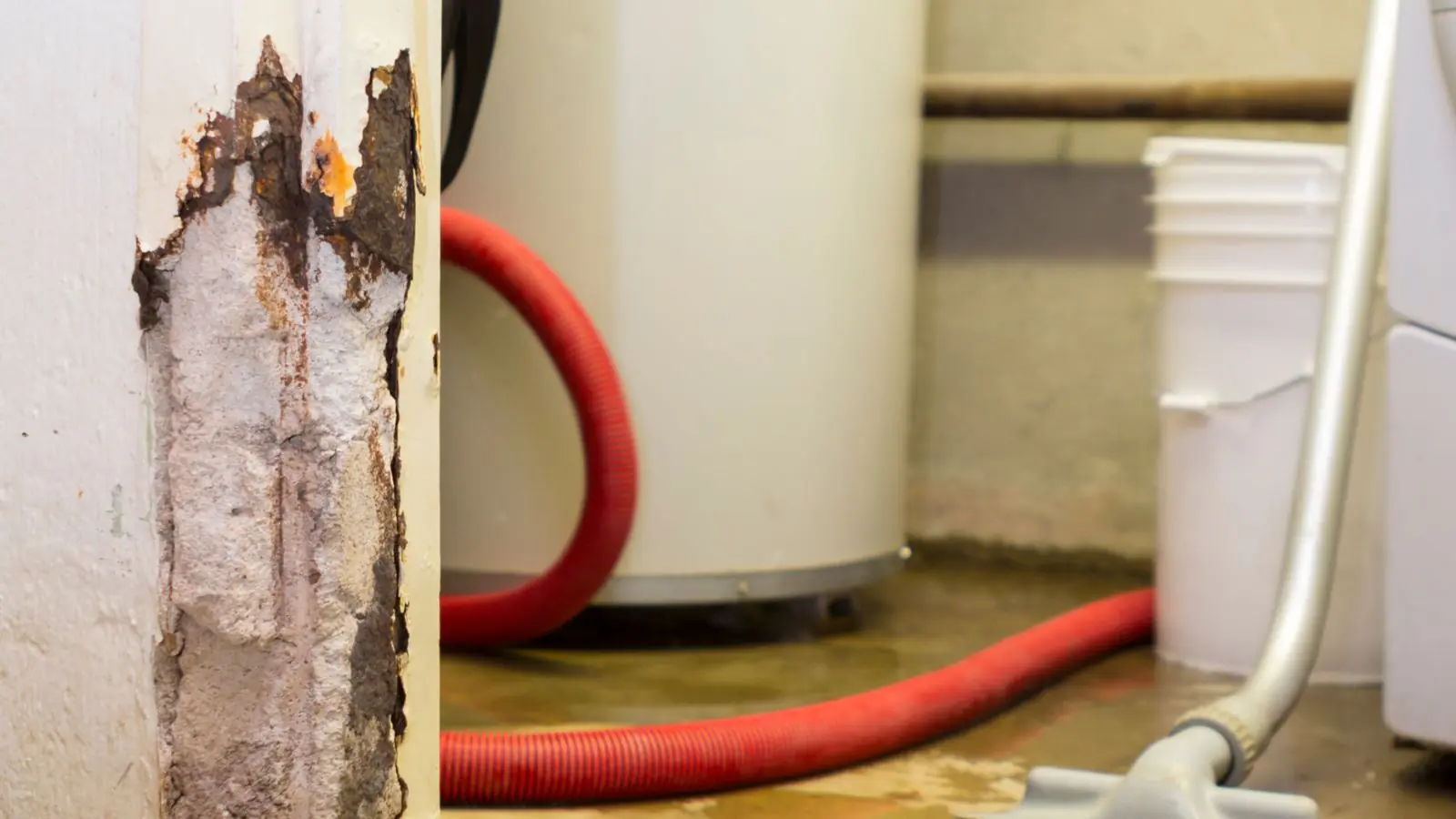
When a washer overflows or a tank starts to weep, water runs across the laundry room, closet or garage floor and into whatever stands beside it. These two appliances cause a lot of calls because they hold or move a lot of water and often sit beside finished walls.
The first ten minutes decide how far the water travels. After that, the questions are what kind of water it was, what has to be pulled up, and what can be dried where it sits. This post walks through each decision in order.
Which kind of water is it
Restoration crews sort water into categories because the category decides how the cleanup is done.
Category 1: clean
A cracked supply line, a failed washer valve or a tank that splits on the clean side. The EPA's drying advice covers this water type.
Category 2: gray
Washing machine overflow and drain-back are gray water. It carries detergent, lint and soil, so porous items it touches are usually discarded.
Category 3: black
Sewage or rising floodwater. If a floor drain in the laundry area backs up, stop and treat it as a professional job.
Water that ages
Clean water left standing can slide into the next category. A tank leak that ran for days behind a closet door should be treated with more caution.
Shut it down in this order
If the appliance is still running or the tank is still feeding, work through these steps in order.
Stop the water at the appliance
For a washer, close the hot and cold valves on the wall box. For a water heater, close the cold inlet valve on top of the tank.
Shut the gas or power only if safe
A gas heater has a control knob on the gas valve. For an electric heater, use the breaker, but only if you can reach the panel on dry floor.
Use the main if the valves fail
Old valves can seize or drip when turned. The main shutoff stops everything, and the meter valve is the last backup.
Keep feet and pets out
Water near outlets, a dryer or a powered tank is an electrical risk. Call 911 or the utility for any gas smell or sparking before you call a restoration line.
Photograph before you clean
Capture the appliance, the valve, the label and the wet walls. These help with any claim and with the plumber.
Water heater leaks look different from washer floods
A washer spill is usually a burst of water over a few minutes. A water heater leak tends to be slower and hidden, a puddle at the base that grows as the tank corrodes through. Many tank leaks are found when a wall base turns soft or a garage floor stays damp.
A leak from the temperature and pressure relief valve or a drain pipe can look like a tank failure when it is really a fitting. Look at where the water first appears, since a wet fitting can be replaced and a split tank cannot.
A tank leaking from the shell body usually means the tank itself needs replacing. Do not try to patch it. Shut off the cold inlet, drain it according to the manufacturer instructions or let a plumber do it, and plan for a new unit.
What to pull up and what to dry in place
Gray water changes the calculation. Carpet and pad that took washer overflow are normally removed, because the pad holds contaminants that drying cannot reach. Wallboard that has wicked water up several inches is checked, and wet insulation behind it usually comes out.
Hard surfaces are the easy part. Sealed concrete, tile and vinyl plank over concrete can usually be cleaned and dried in place. Cabinets with solid bottoms can often be saved if the toe kick is cut and air is moved behind them.
- Pull and discard: wet carpet pad, soaked cardboard, particleboard shelving, wet insulation, soft baseboard.
- Dry in place: tile, sealed concrete, solid wood trim that is still firm, wallboard that is not swollen and has intact seams.
- Check with a meter first: framing at the wall base, subfloor under vinyl, the back of cabinets.
Questions about your own situation?
Call dispatch to talk through what you are seeing. Scope and price are explained before work starts.
How the drying is run
First, extraction units lift the standing water. Air movers are then placed to push air across wet surfaces, and LGR dehumidifiers pull moisture out of the room so it does not condense on cool walls. Small holes or toe-kick removal let air reach the wall cavity behind the washer.
The EPA uses a 24 to 48 hour window as a guideline for starting the drying, because materials that stay wet longer need more than a fan. Daily meter readings and thermal imaging scans track progress. Ask each company if its crews follow S500, and ask when the equipment is due to come out.
A laundry room with an interior wall often needs less equipment than a garage with a block wall and a slab. The scope and price should be explained before work starts, based on the area and the materials involved. This order of work is the core of water mitigation, and the cleanup that follows is covered under water damage cleanup.
Glendora note: permits for a water heater replacement
The Building and Safety Division of the City of Glendora sits on East Foothill Boulevard and keeps weekday hours, 8am to 5pm Monday through Friday. On its city web page, the division presents itself as where permit and inspection questions start, with an online portal for plan check and permits. Its public hours are Monday through Friday, 8am to 5pm, and the city page points to an online plan check and permit portal.
That page never says which jobs need a permit, so we do not claim a rule. If a tank has to be replaced, phone the division with your address and ask if a permit applies before the new unit is set. One short call now can head off a snag at sale time or at a later inspection.
Before you run a fan
Keep fans off gray water until it has been assessed. Air movers can spread contamination across a wider area.
Honest limits and the neighbor question
We dry the structure and remove damaged material. We do not replace water heaters, repair supply valves or sign off on appliance installation, which belong to a plumber. Your plumber and your restoration crew should talk, since the plumber needs the water off and the dryers need the water stopped.
A leak that reaches an adjoining unit or the garage next door changes the picture, since a townhome shares walls. Neighbors west in Azusa and south in Covina get the same sequence when a laundry leak crosses a shared wall.
Frequently asked questions
Not always. A burst supply hose releases clean water, but a drain overflow or drain-back is gray water. Treat the second as Category 2, which means more removal and no fans until it is assessed.
A steady leak can wet the lower wall and the floor under the heater in a matter of hours. A slow drip can run for weeks before the baseboard swells. Check the garage or closet floor for dampness each time you do laundry.
Yes for clean water, as long as the vacuum is plugged into a dry outlet and you are not standing in water. A professional extraction unit lifts far more water from carpet and pad, and gray water calls for gloves and boots.
A sudden failure is often covered, while a gradual leak or neglect often is not. Look at your policy or ask your insurer. Photos of the failed part and a written scope help.
Keep the failed part if you can, since it shows what broke. Your plumber or your insurer may want to see it. Take a photo with the label before you toss anything.
No rule appears on the city page we read. The call to make is to Building and Safety, before the work starts and not after.
Talk to dispatch
The line is open 24/7. Describe what you see and the next step is explained.