
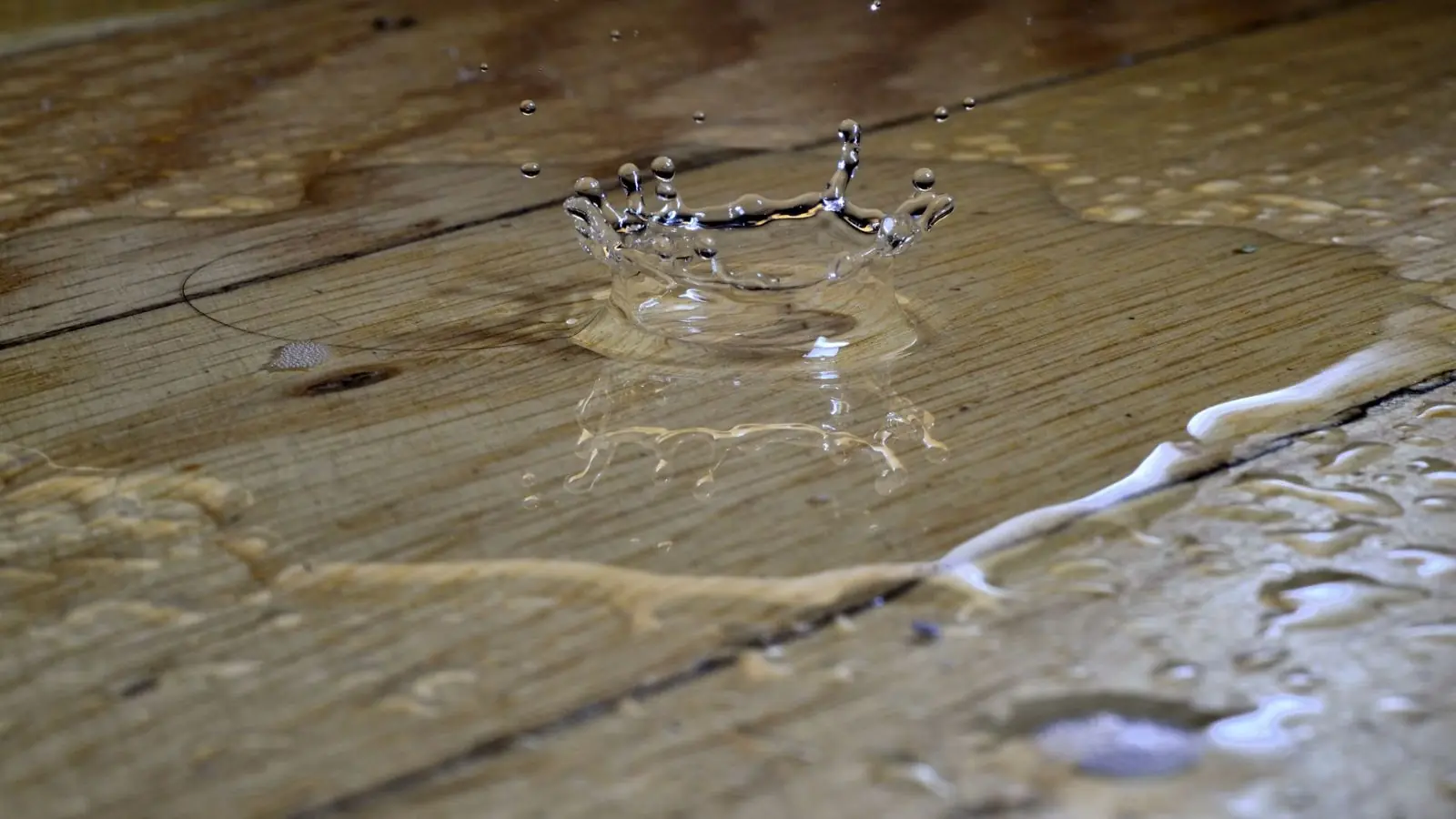
Hardwood that drinks up water swells, and the swelling shows as cupped, crowned or lifted boards. In Glendora homes it often starts small: a washer supply valve that lets go, or an AC condensate line that backs up and drips against the wall base for weeks.
Many floors can be dried in place if the work starts early. The wrong repair, usually sanding too soon, can ruin a floor that was recoverable. This post covers the stages of damage, the meter readings that matter, and the point where replacement makes more sense.
Cupping, crowning and buckling are three stages of one problem
Cupping comes first. The edges of each board rise above the center, so the floor looks like a row of shallow troughs. It usually means moisture reached the boards from below or from the side, and the underside swelled faster than the top.
Crowning is the reverse, with the center of each board higher than the edges. It shows up when a cupped floor was sanded flat before it dried, or when water sat on top of the boards. Buckling is the last stage, where whole sections push up off the subfloor, sometimes an inch or more.
A cupped floor is often recoverable. A buckled floor has usually lost its fastening to the subfloor, and the odds of saving it drop sharply. The difference between those two is mostly how many days the wood stayed wet.
What you see, what likely caused it, and what to do
Use this as a first read before anyone brings a meter into the room. It is a starting point, not a diagnosis.
| Symptom | Likely cause | Action |
|---|---|---|
| Edges raised, center low, floor still firmly nailed | Slow moisture from below, such as a condensate line or a small supply leak | Find and stop the source, then dry in place and recheck readings weekly |
| Center raised, edges low, floor was recently sanded | Sanded before moisture content settled | Stop any further sanding and let readings stabilize before judging the floor |
| Sections lifting off the subfloor | Standing water for several days or a large release | Plan on partial board removal, then dry the subfloor beneath |
| Dark stains at seams and nail holes | Repeated wetting or a long, slow leak | Expect board replacement in the stained area and check the subfloor |
Drying hardwood in place or pulling it up
Drying in place uses drying mats or panels laid over the floor. A vacuum pulls air through the board seams while heated air moves across the surface, drawing moisture out of both faces of the wood. The setup usually runs for several days, and technicians check it daily with a moisture meter.
This works best on solid or thick engineered hardwood over a wood subfloor, when the boards are still tight and the water source was clean. It works poorly on glued-down floors over concrete, thin laminates, or any floor with a layer of foam underlayment that holds water.
Replacement is the better call in a few situations:
- Boards have lifted or split along the tongue and groove.
- The floor stayed wet for well beyond the 24 to 48 hour window the EPA uses as its guideline.
- The EPA limits its drying advice to clean water, so the water type has to be known first.
- Readings in the subfloor stay high after several days of drying.
Two real scenarios: a washer valve and a condensate line
One homeowner heard a hiss from the laundry closet and found the washer hot-water valve had cracked. About a gallon a minute ran across the closet floor and under the baseboard into the hallway oak before the main was shut. Because the water was clean supply water and the boards were still tight a day later, the floor was dried with mats and most of it was kept.
The second case was slower. An air handler in a hall closet had a clogged condensate line that overflowed a little each day for what turned out to be a couple of months. By the time the boards cupped, the subfloor under them read high and several boards were stained at the seams. Those boards were replaced and the rest dried and blended.
Questions about your own situation?
Call dispatch to talk through what you are seeing. Scope and price are explained before work starts.
Moisture meter readings, in plain terms
Hardwood in a lived-in home normally reads somewhere around 6 to 9 percent moisture content. A wet floor can read 15 percent or more, and water-soaked boards can pass 25 percent. Pin meters read at depth, and pinless meters scan a wider area without leaving holes.
The numbers only mean something next to a reference. A technician reads a dry board from a room that was not affected, then compares the wet area to that baseline. The goal is not zero but a match with the dry reference.
Readings should also be taken in the subfloor and sometimes the wall base. A thermal imaging camera can show a cold, wet patch hiding behind a good-looking surface. Ask for the actual numbers and where they were taken.
Why sanding too early fails
Wet wood is swollen wood. If you sand a cupped floor flat while the boards still hold extra moisture, you remove the high edges, and when the wood finishes drying the center ends up higher than the edges. That is crowning, and it is far harder to fix than the cupping was.
Finish also traps moisture. Applying stain and sealer over boards that have not stabilized can cloud the coating and lock dampness in. A sensible schedule waits until readings match the dry reference and have held steady, and the wood can keep moving for a couple of weeks after it reads dry. Refinishing after that gives a flat surface that stays flat.
Glendora note: know which utility serves your home
The Azusa city site, in its page on Azusa Light & Water, says that utility serves every Azusa customer and also parts of Covina, Glendora, Irwindale and West Covina. So the City of Glendora Water Division is not necessarily the one behind your meter. That means some Glendora addresses are not served by the City of Glendora Water Division at all.
The practical payoff comes during a leak. Your bill names the provider, which tells you whose main and meter to look for when a supply line fails and the shutoff will not turn. For flooring jobs that start with a washer or toilet supply line, the quickest fix is usually the angle stop at the fixture, and the meter is the backup.
First-day checklist for a wet wood floor
These steps protect the floor while you decide what to do next.
Stop the source
Close the fixture shutoff or the main valve, and unplug anything standing in water only if the outlet and the floor around it are dry.
Remove standing water and furniture
Mop or wet-vacuum puddles, then lift rugs, boxes and furniture legs off the boards. Wet rubber or foam pads stain wood quickly.
Photograph everything
Shoot wide and close, with a coin or tape measure for scale, covering the wet patch, the source and any cupping.
Book a moisture assessment
Ask for readings in the boards and the subfloor before anyone proposes a repair, and ask to see the numbers.
Honest limits
Drying will not flatten a floor that has already buckled, and it does not repair a plumbing leak. A plumber fixes the source, and a flooring contractor handles sanding and finishing. Our part is the drying and the readings that tell everyone when the floor is ready.
If you need a repair scope for a claim, our crews can write one from the readings, and water damage repair work begins there. When the release is fresh, drying equipment is the priority, which is the focus of water mitigation. Homes east and south of Glendora, in San Dimas and Covina, follow the same logic.
Frequently asked questions
Often yes, if it is still nailed down and the source was clean water. Cupping eases as the boards dry slowly, and it can take several weeks for the shape to settle. Judge the floor after the readings stabilize, not before.
Most setups run for several days and are checked daily with a moisture meter. Thick boards and wet subfloors take longer. The crew should stop only when readings match your dry reference board.
Not right away. Wait until readings are steady, and often for a couple of weeks after that. Sanding while wood is still moving is what turns cupping into crowning.
Coverage usually turns on how the water arrived. A burst or sudden release is often covered, while a slow seep from neglect often is not, so read your policy or phone your insurer. Dated photos, logged meter numbers and a written scope give that call something to work from.
It changes who owns the main and meter, not who dries the floor. Check your bill to see your utility, and shut off at the fixture first. Then call a restoration crew for the wet floor and a plumber for the repair.
Talk to dispatch
The line is open 24/7. Describe what you see and the next step is explained.